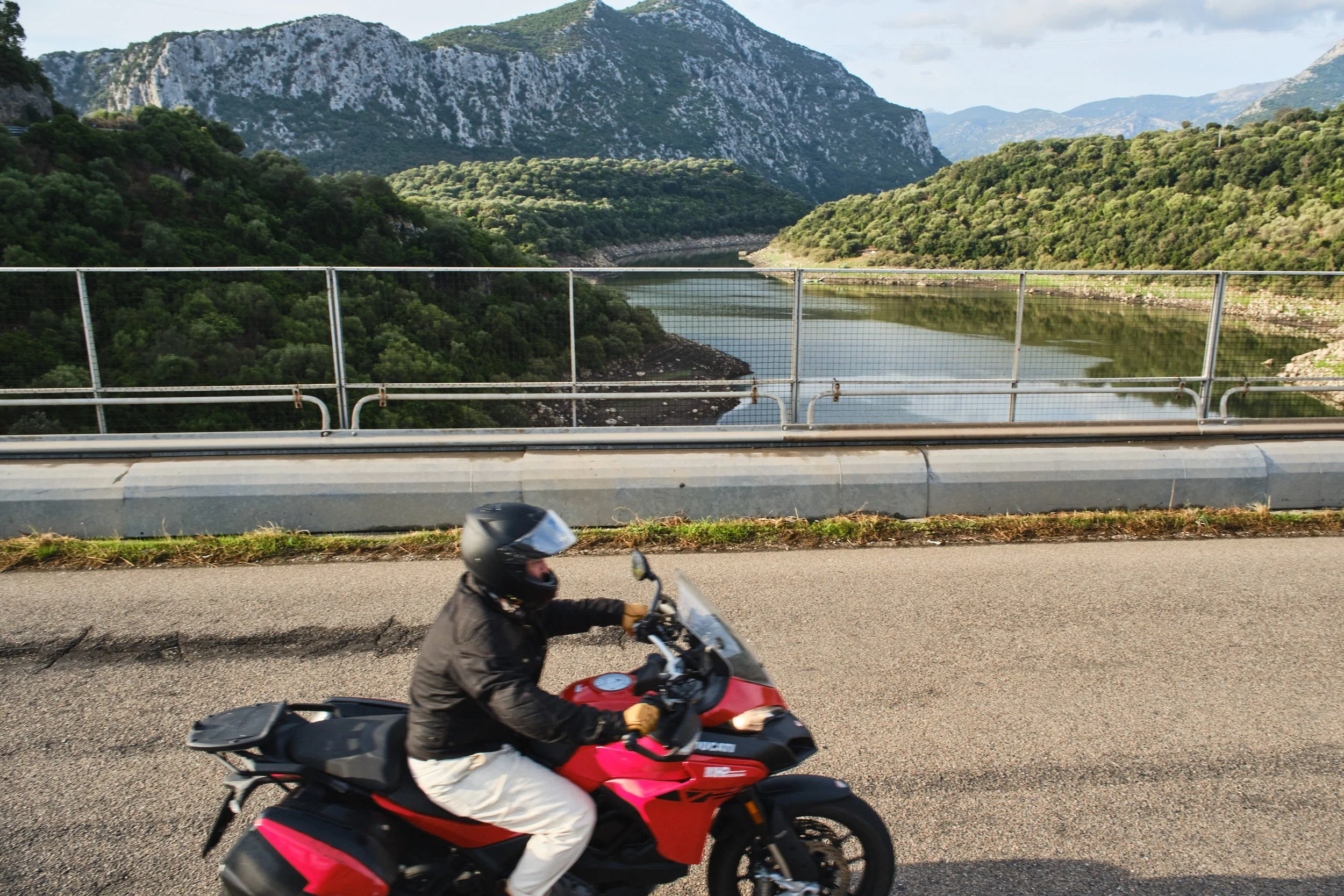
Riding Motorcycles in Italy
A Local’s Guide to Riding Motorcycles in Italy — Tips, Etiquette, and Hidden Roads
Riding on the iconic Amalfi Coast
At All Routes Italy we’ve spent countless hours watching riders fall in love with this country from the saddle — that first gasp at the sight of the Amalfi Coast shimmering below, that wide grin after carving through a mountain pass on the Gran Sasso, that moment of disbelief when they realise they’ve just parked their motorcycle in the middle of a medieval piazza.
Italy does that to you. It seduces and challenges you in equal measure. Riding here isn’t just about moving from one place to another; it’s a full-bodied experience — part adventure, part dance, part love affair.
And yet, Italy has its own peculiar rhythm. It’s beautiful, unpredictable, and sometimes exasperating — but if you understand how it works, it becomes pure joy.
Riding in Italy isn’t just transportation — it’s theatre. That’s what we aim to share with riders who join our motorcycle tours — whether they choose to ride with a guide or explore on their own.

The Rhythm of the Road
Italian roads are a study in contrasts. One moment, you’re gliding over silky tarmac with sweeping curves that seem designed by a motorcyclist; the next, you’re dodging potholes, gravel, or an unexpected herd of sheep. The autostrade — the main highways — are fast and efficient (and tolled), but the real beauty lies on the strade provinciali and mountain passes, where every bend offers a postcard view or a café serving espresso strong enough to wake the dead.
But here’s the first lesson: expect the unexpected. Signs aren’t always clear, closures can appear out of nowhere, and GPS systems tend to get creative once they encounter medieval villages. When that happens, trust your instincts — or better yet, follow your tour leader or a local.
Decoding the Italian Driver
Let’s address the obvious: Italian traffic has a reputation. From the outside, it looks like anarchy — cars nosing into junctions, scooters squeezing through impossible gaps. But it’s not chaos; it’s choreography. Everyone moves quickly but attentively. Once you tune into the rhythm, it starts to make sense.
Here’s how to survive and enjoy it:
Use confidence, not aggression. Italians respect decisiveness. Hesitation causes confusion — smooth, clear movements are the safest.
Flashing high beams. If an oncoming car flashes their high beams at you, they aren't saying "Hello." They are saying "I am currently committed to this line, do not pull out."
The horn is a tool of communication, not frustration. A short beep says “I’m here” or “heads up,” not “move or else.”
Filtering (lane splitting) is not just legal; it’s expected. If you sit in a line of traffic on a motorcycle, Italian drivers will look at you with confusion. Use your indicators, be decisive, and flow with the scooters. If you hesitate, you become an obstacle. Confidence is the safest gear you can wear in Italy.
Stop signs are, let’s say, “flexible.” Many drivers perform a rolling stop, so always double-check before pulling out.
Traffic lights are of course mandatory, but some skip the yellow and sometimes even jump the red. To stay 100% safe always glance for cars or pedestrians when passing a green light.
Parking is refreshingly easy — motorcycles often slot between cars or near crossings, as long as you’re not blocking anyone and your bike stays safe. Watch how the locals park, and you’ll see what’s tolerated. In the old towns and country villages your vehicle will be pretty safe. Better care must be taken in big cities like Rome, Milan or Naples.
ZTL zones (restricted traffic areas) can be confusing. Most towns have them to preserve their old town centres, but motorcycles are often exempt — Siena, for instance, allows two-wheelers. Always check the local rules on the sign at the entrance to the ZTL; cameras are unforgiving.
Headlights on, always. It’s the law, day or night, and a good habit regardless.
If this all sounds overwhelming, it’s not. Within a few days, you’ll be flowing with it — leaning into the rhythm instead of fighting it. On our guided tours, we ease riders into this style naturally, making sure you stay safe and gradually adapt to it.
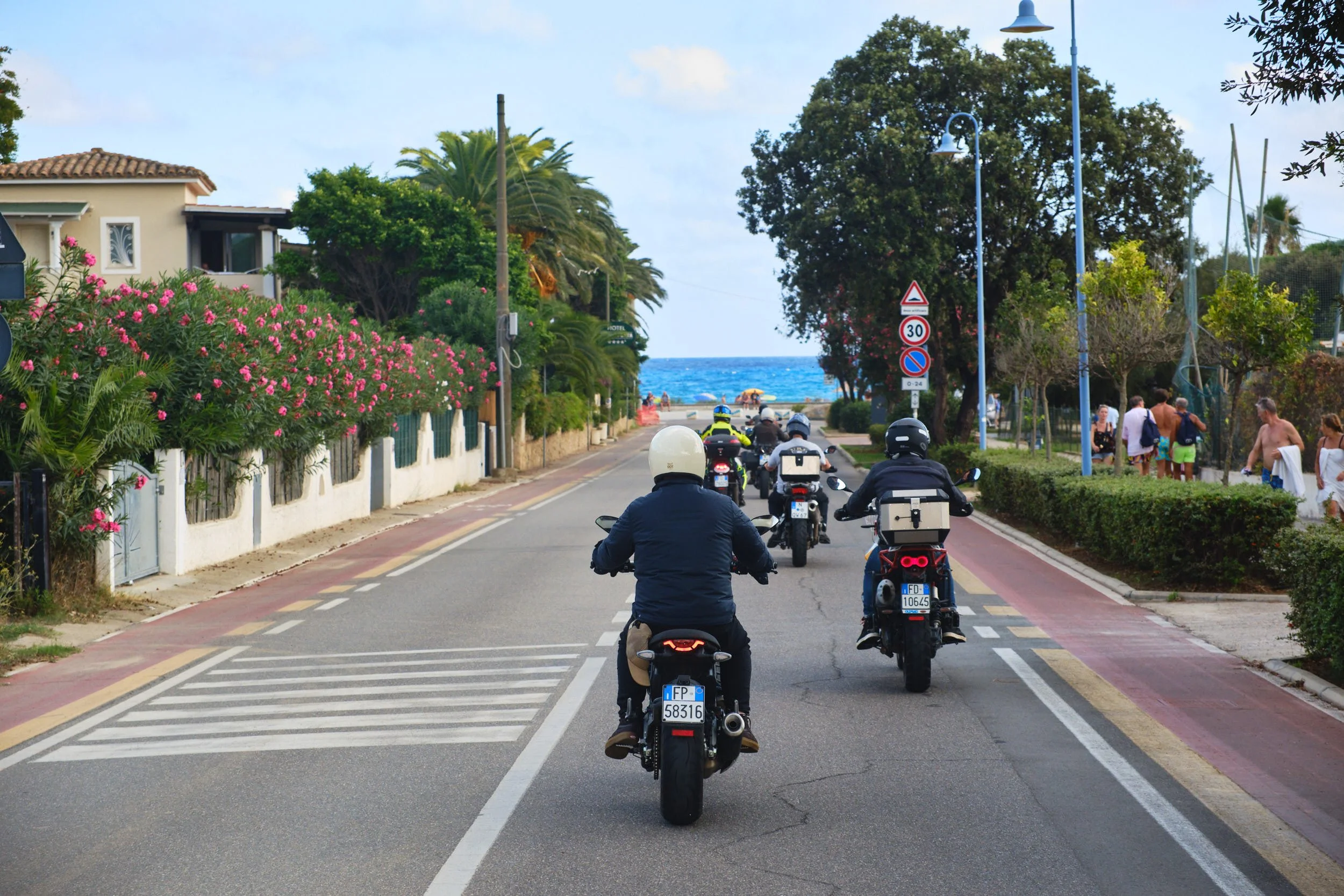
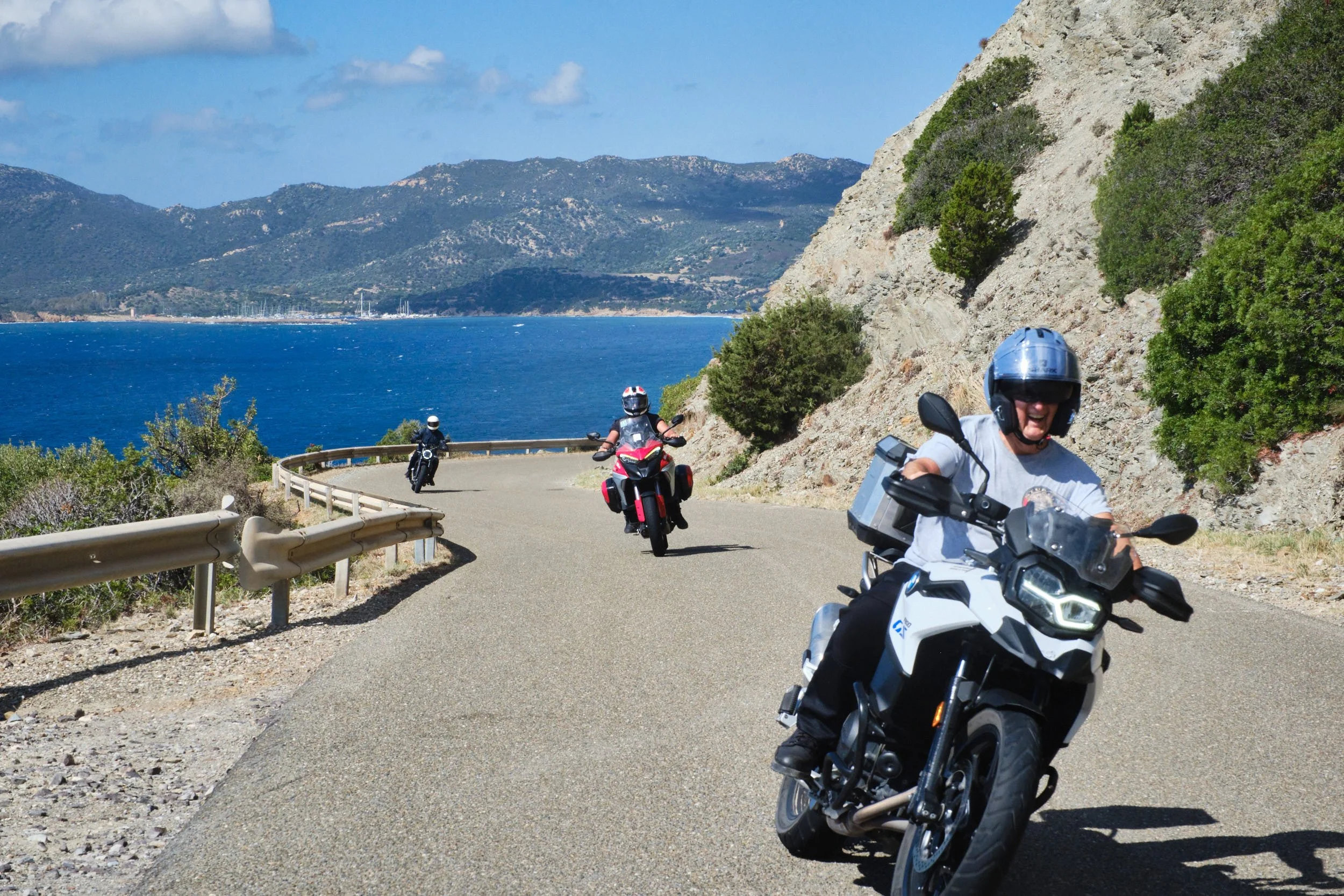
Riding to the beach bar in Sardinia.
PRO TIP:
The "ZTL" Secret: How to Ride Into History Without the Fines
The Zona Traffico Limitato (ZTL) is the ultimate trap for the uninformed rider. These restricted areas protect medieval centers, and while they are often marked with a white circle and a red border, the rules vary by city.
The All Routes Italy Advantage: In many Tuscan towns like Siena, motorcycles are often exempt from ZTL restrictions that apply to cars, but you always need to check the sign at the entrance. In cities like Rome or Florence, the rules are much stricter.
Look out for the "Varco Attivo" (Active Gate): If the electronic sign says Varco Attivo, the cameras are on and you must not enter. If it says Non Attivo, you are generally safe to pass.
Fabio’s Rule: When in doubt, park just outside the city walls. On our guided tours, we take care of the "last mile" navigation, ensuring you park right in the heart of the action without risking a ticket that arrives in your mailbox six months later.
Safety and Practicalities
Italy rewards awareness and punishes complacency. Here are a few practicalities every rider should know before setting off:
Documents: Always carry your driving license, insurance, and vehicle registration. The police may check them, especially near borders.
Gear: Helmets are compulsory, even if some don’t think so, and gloves and jackets are highly recommended — not just for safety, but for the weather’s sudden changes. It’s a good practice to bring 2 pairs of gloves, one lighter and another to ride at altitude.
Speed limits: Unless otherwise signposted, 50 km/h in towns, 110 km/h on primary roads, 90 km/h on secondary roads, 130 km/h on the autostrade. Speed cameras (autovelox) are frequent — locals know exactly where they are, so pay attention to sudden mass slowdowns. On our tours, the leader will always warn the riders when approaching a speed cam.
Fuel: Most stations have two types of pumps: Servito, which cost a little more, where an attendant will fill you up and you pay him/her directly with cash or card, or Self , a little cheaper, but you have to first pay at the machine, then fill up yourself. Served stations in rural areas often close for lunch and Sundays, though you’ll usually find self-service pumps open. All stations take card, but not always foreign ones — keep some cash handy, and bear in mind self service machines do not give change.
Weather: Italian summers can be brutally hot. Early morning and late afternoon rides are best, with a generous lunch pause in the shade (another Italian art form we specialise in). This is one of the key reasons why ARI only run tours during Spring and Autumn.
Fueling Up: Don't Get Stranded on a Sunday
Fueling in rural Italy is an art form. You will encounter two types of service:
"Servito" (Served): You stay on the bike. The attendant fills you up. You pay a premium (usually +€0.20 per liter) for the convenience.
"Self" (Self-Service): You must pay at the central machine first.
Important Warning: Many self-service machines in mountain regions (like Gran Sasso or Sardinia) do not give change. If you put a €50 note in but only have room for €30 of fuel, the machine will print a "credit slip" that you can only redeem at that specific station. Always carry smaller notes (€10, €20) or ensure your credit card is a "Chip & PIN" variety, as older "swipe" cards often fail at Italian pumps.
Note: On All Routes Italy tours, we time our stops so you are never hunting for a pump with a flashing reserve light.
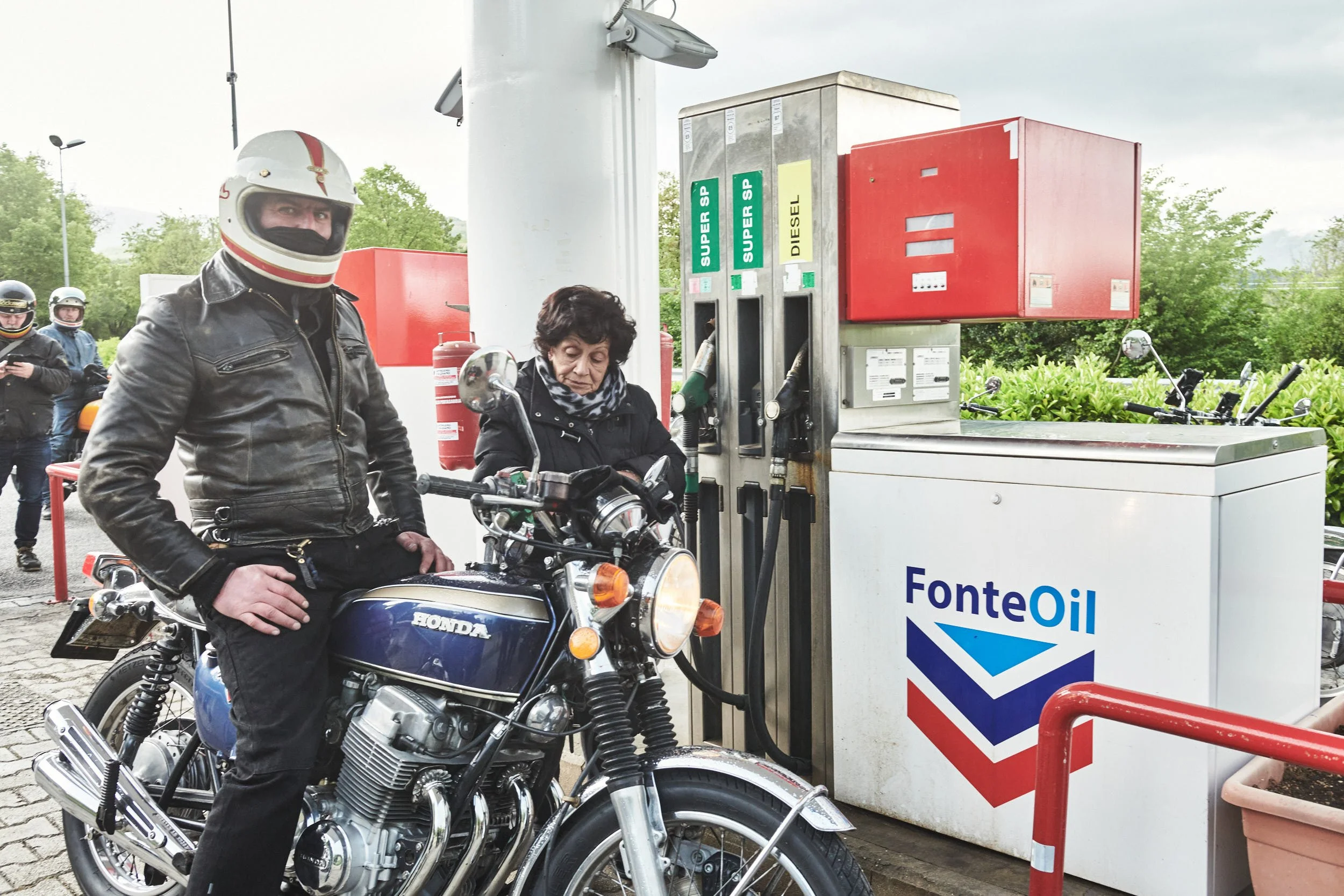
Never too old to attend a biker.
The Joy of the "Sosta" (The Pause)
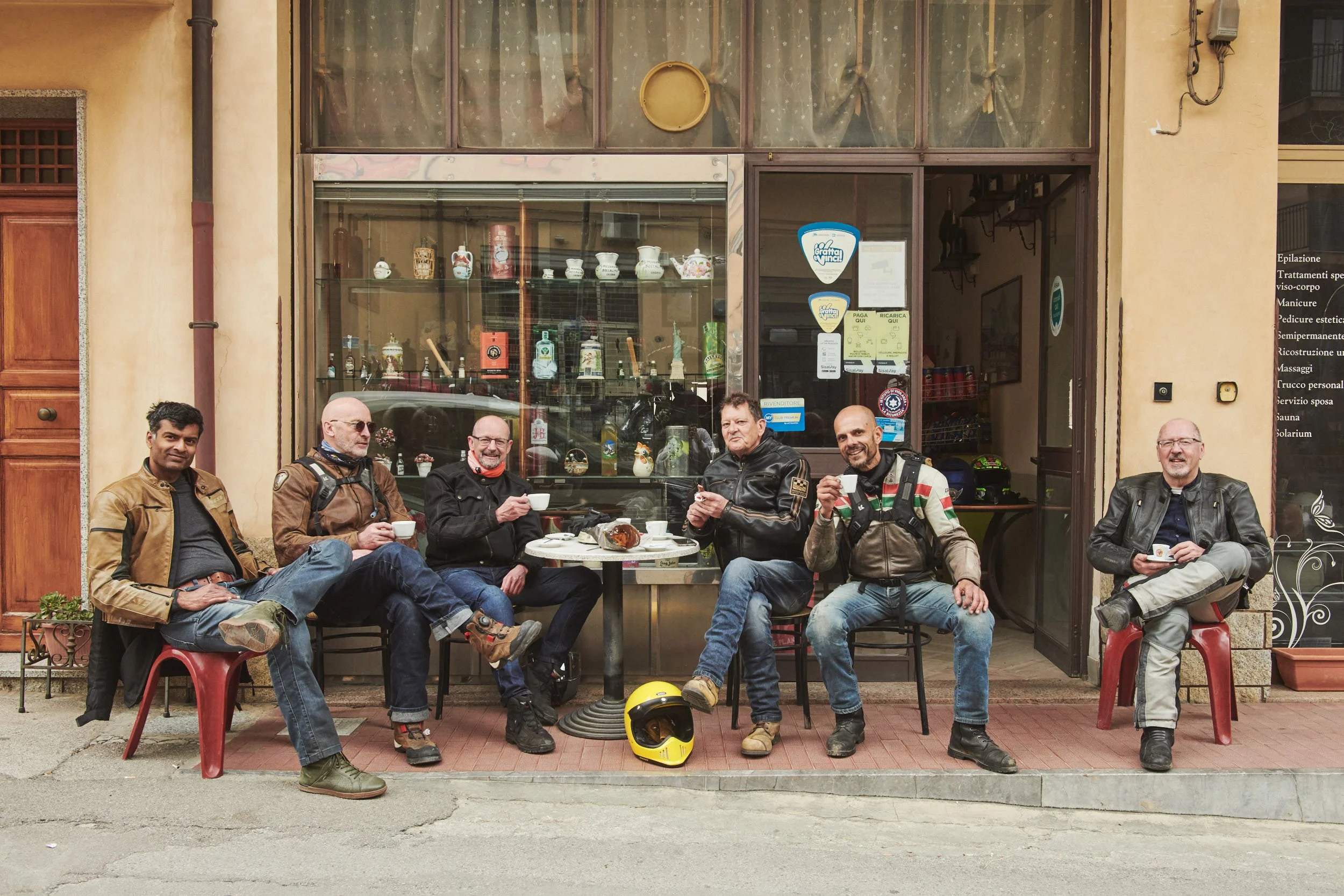
In Italy, the "Sosta" isn't a break from the ride—it is the ride. One of the most Italian lessons you’ll learn is to slow down — not in speed, but in spirit. Every journey should have its sosta — a pause. It could be an espresso shot in a village bar, a lakeside lunch, or an impromptu conversation with a farmer about your bike.
The Morning Espresso: Stand at the bar. Drink it fast. It’s the Italian way to reboot for the next set of hairpins.
The Long Lunch: We specialise in the "Slow Food" sosta. Whether it's Arrosticini on a mountain plain in Abruzzo or fresh seafood in a Sardinian cove, we prioritise authentic, family-run trattorias where the bike is parked right where you can see it.
Want to see the places we stop? Check out our Gran Sasso tour for a taste of the mountain life.
Expect the Unexpected
Italy is unpredictable, and that’s precisely what makes it magic. A “road closed” sign might lead you to a hilltop view not visible on Google. A wrong turn might deliver you into the middle of a village festival. Rain might force you to shelter under a café awning and share stories with locals who’ll insist you try their homemade grappa.
When you tour with All Routes, everything is carefully planned and communicated before hands, so you can ride without a worry, and yet we like to keep the freshness of the unexpected by sharing with you our very favourite and unique spots that are guaranteed to take your breath away.
The key is to ride with flexibility and curiosity. Italy doesn’t reward control — it rewards openness.
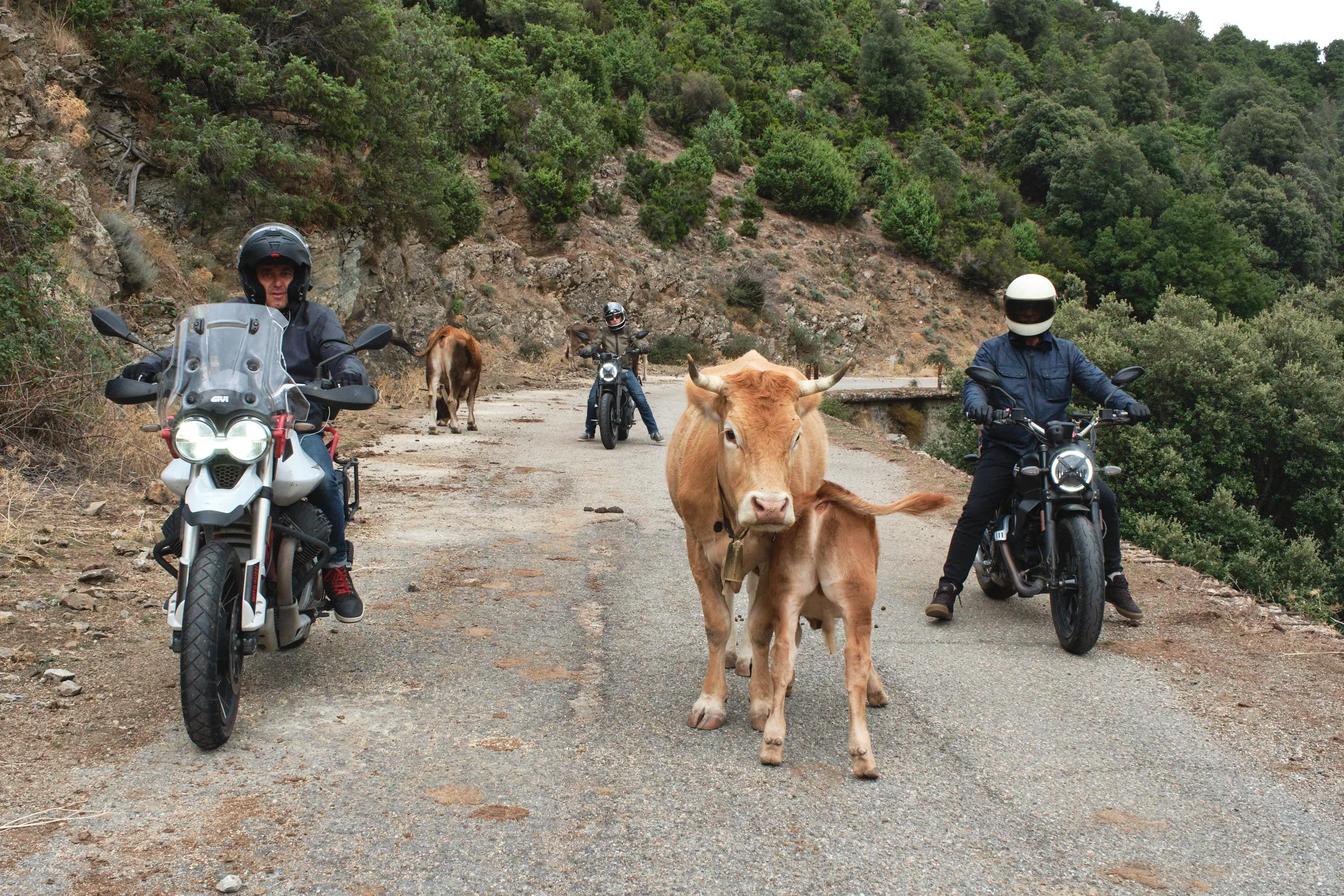
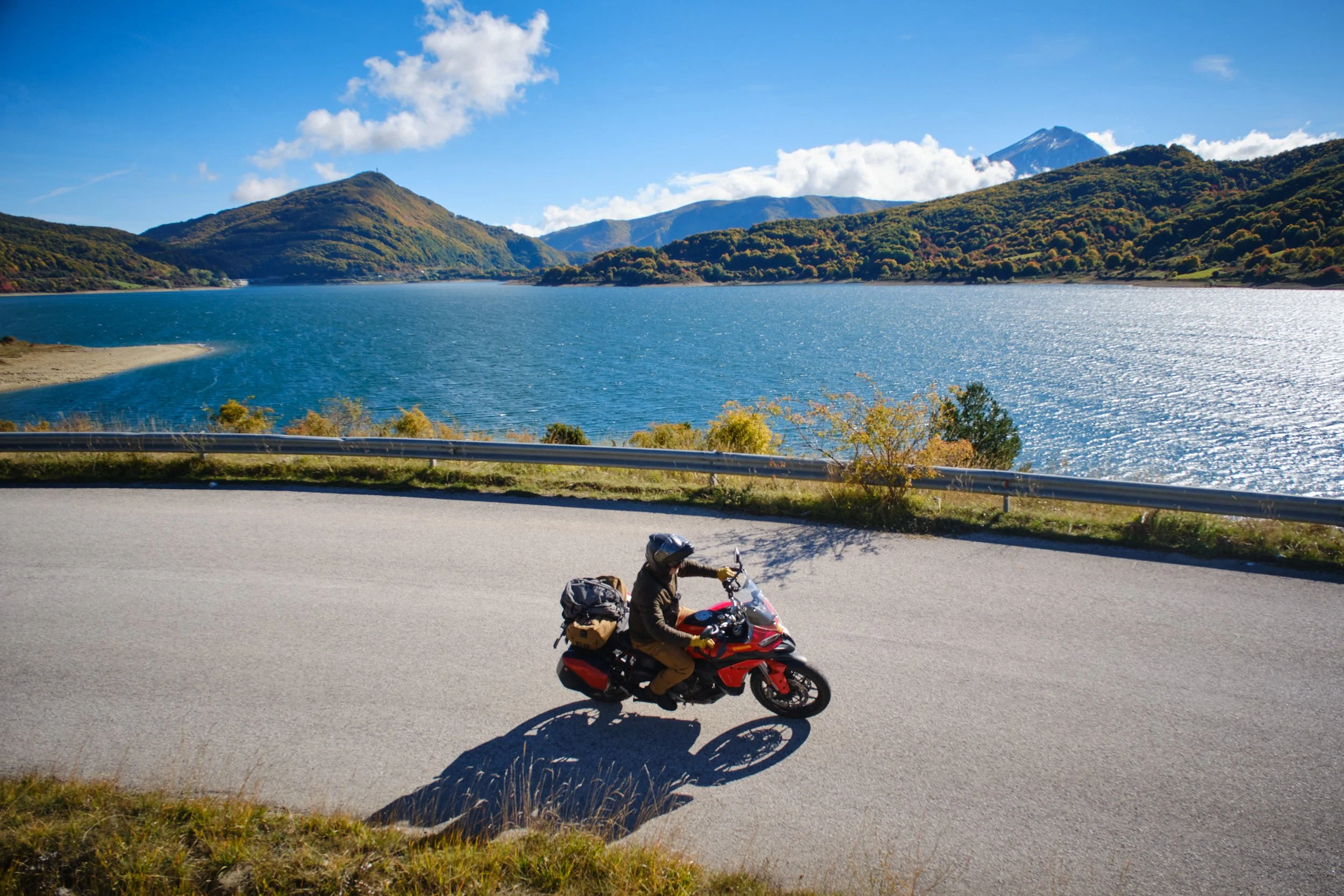
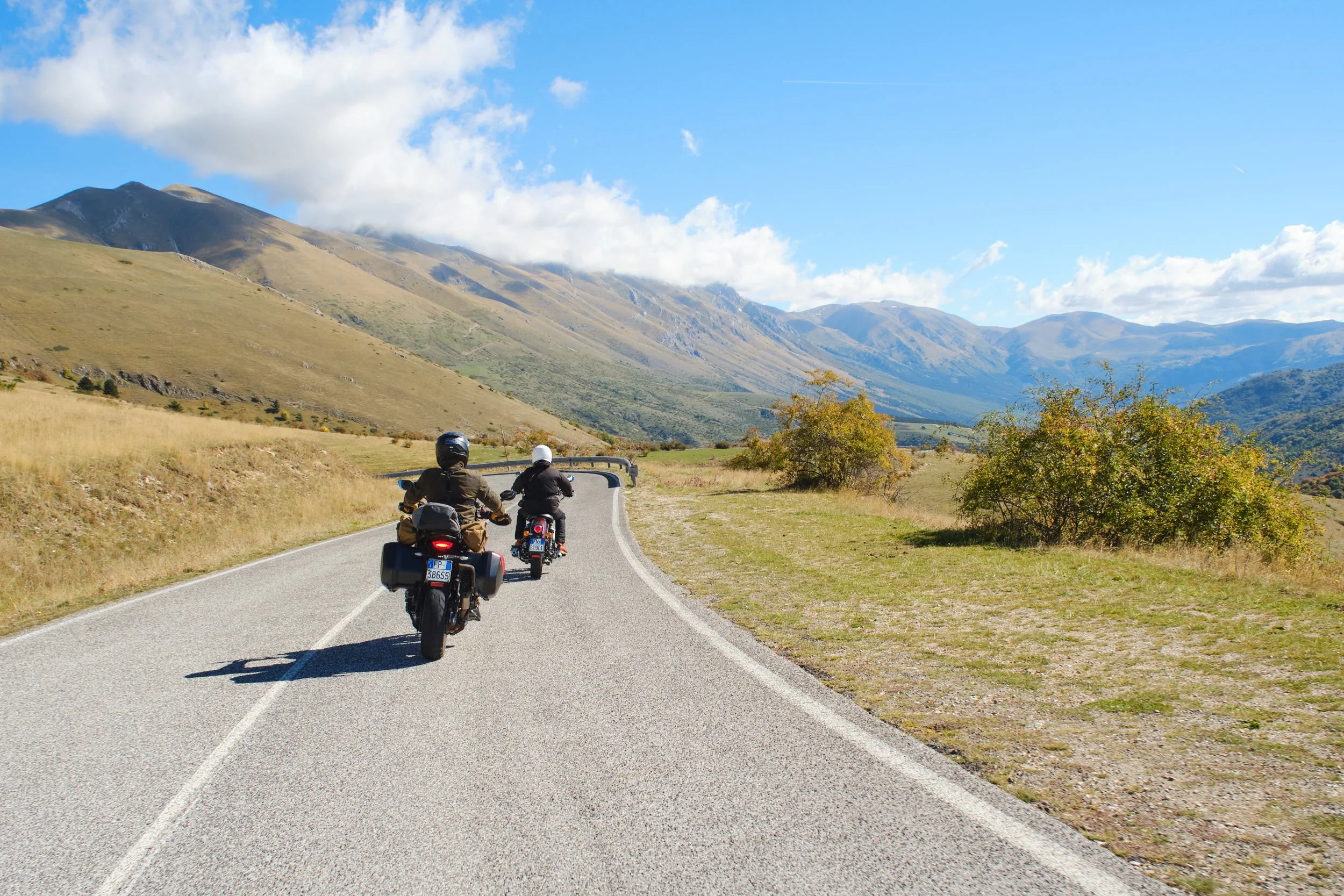
Through the central Italy Apennines on the Gran Sasso tour
The Final Word
Riding in Italy isn’t for those who crave order and predictability. It’s for those who crave experience. It’s a place where beauty and chaos live side by side — where every bend carries a surprise, every café stop a story.
At All Routes Italy, we help riders make sense of that beautiful chaos — with guided tours that reveal the country’s hidden routes, plus self-guided options for those who want to wander freely, knowing someone’s watching the map in the background.
Whether you’re chasing Sardinian coastal roads, tracing the Amalfi cliffs, or simply following the scent of espresso through Tuscany, one thing is certain: once you’ve ridden Italy, the road will never feel the same again.
All Routes Italy — find your line, and follow it.
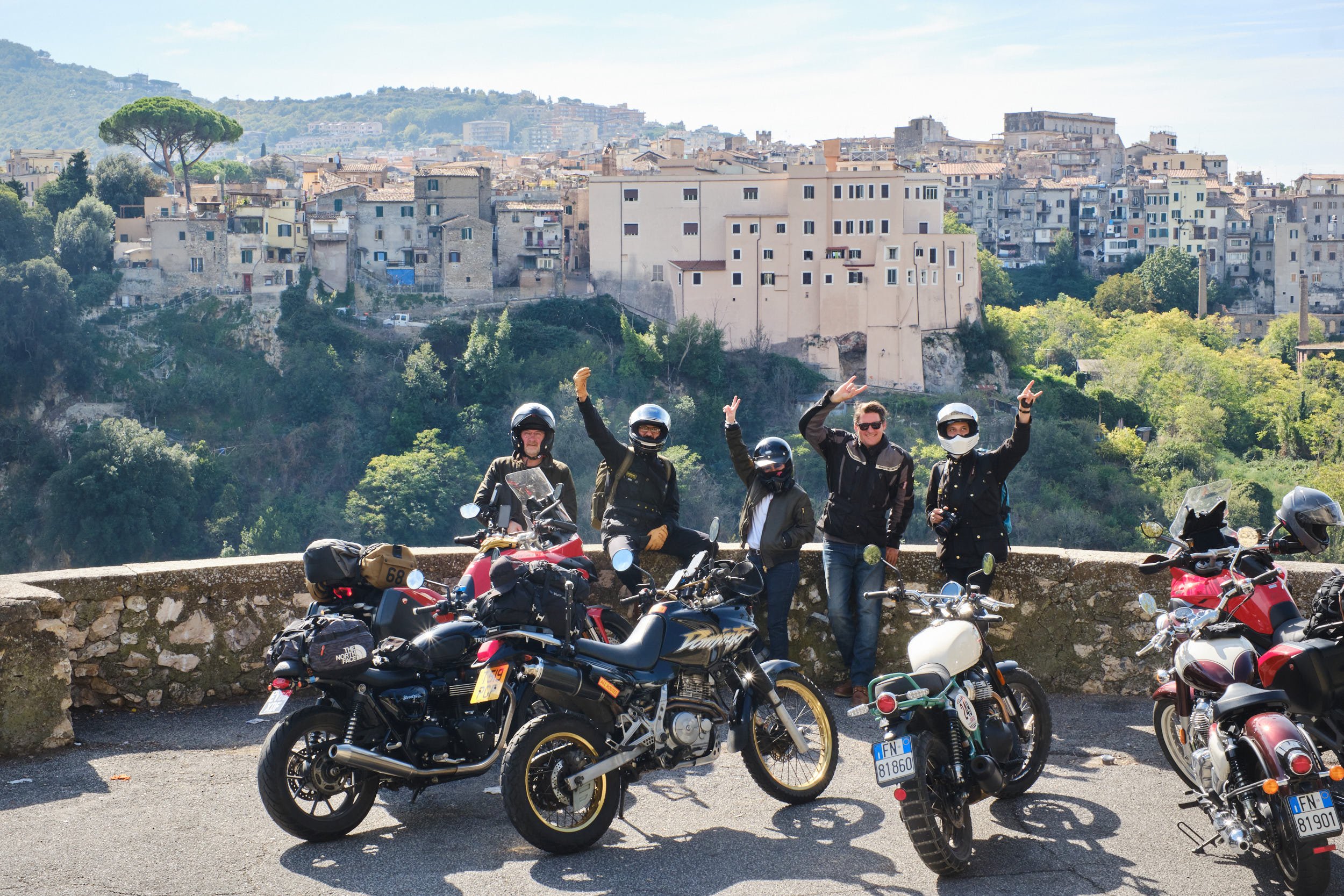
During the Gran Sasso tour, overlooking beautiful Tivoli