
Food, Culture and the Open Road: A Guide to Eating Well on a Motorcycle Tour of Italy
A guide to the regional food traditions, best restaurants and culinary experiences across Italy's finest motorcycle touring routes — written by a Neapolitan-born rider who has spent decades exploring these roads and these tables.
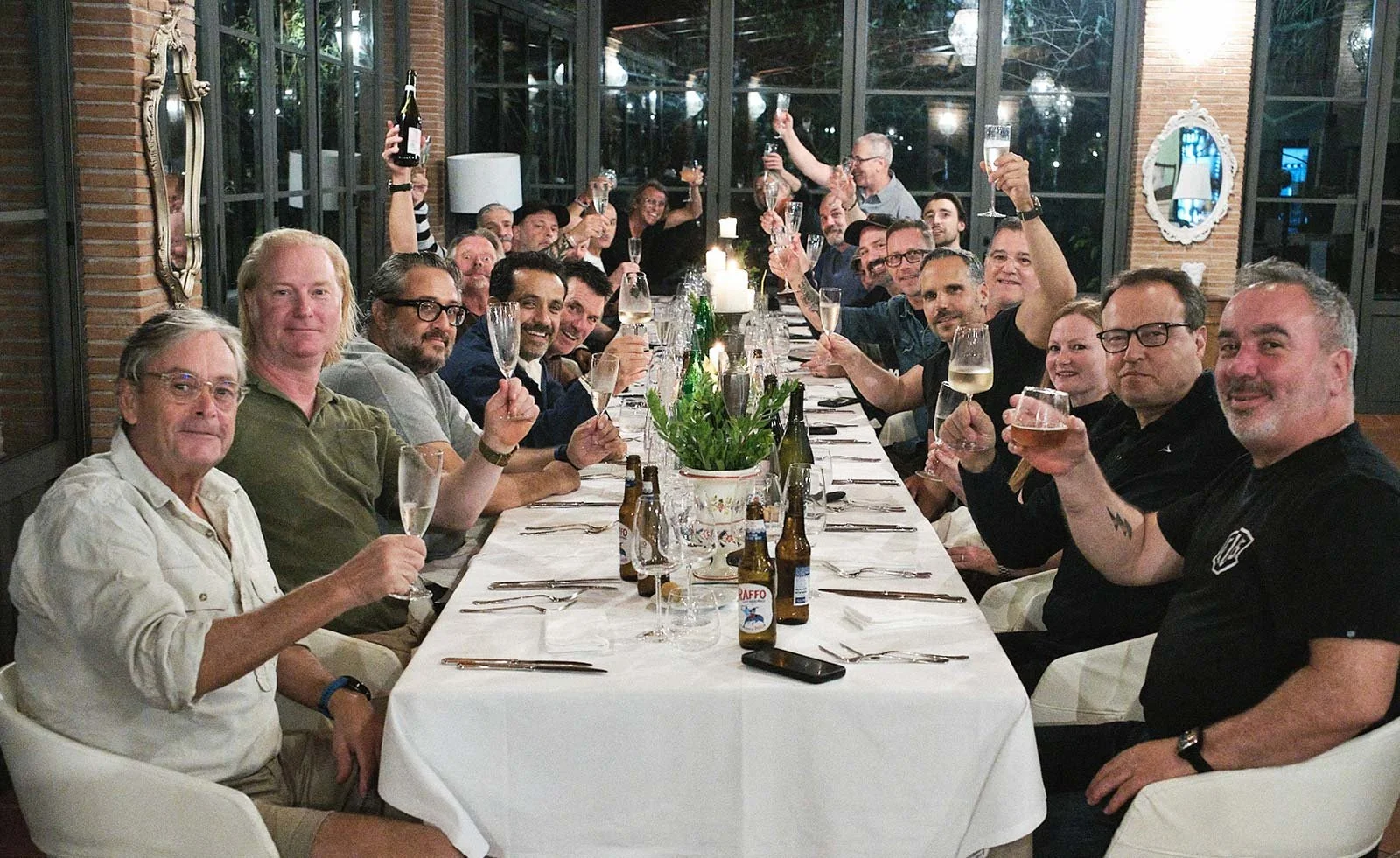
Eating well is never an afterthought on an All Routes Italy tour.
I grew up in Naples. I left for the UK at nineteen, but Italy never really left me. And the thing I missed most — more than the weather, more than the streets, more even than the language — was the food. Not just the taste of it, but the whole world around it: my nonna's hands shaping gnocchi on a Sunday morning, the smell of the ragù my mother would start on Saturday night and let simmer until lunch the following day, my father and I making wine together in our garage every autumn during my teenage years. These are not just memories. They are the reason I do what I do.
When I founded All Routes Italy, I wanted to build motorcycle tours that gave people the real experience of this country — the roads, yes, but also the life around the table. Because in Italy, the two are inseparable. Every route we design passes through landscapes that end up on your plate. Every stop we choose is chosen with both the riding and the eating in mind. This guide is my honest attempt to share what I know about eating brilliantly across Italy's best motorcycle touring regions — from the restaurants I return to every year, to the lessons learned over decades on these roads.
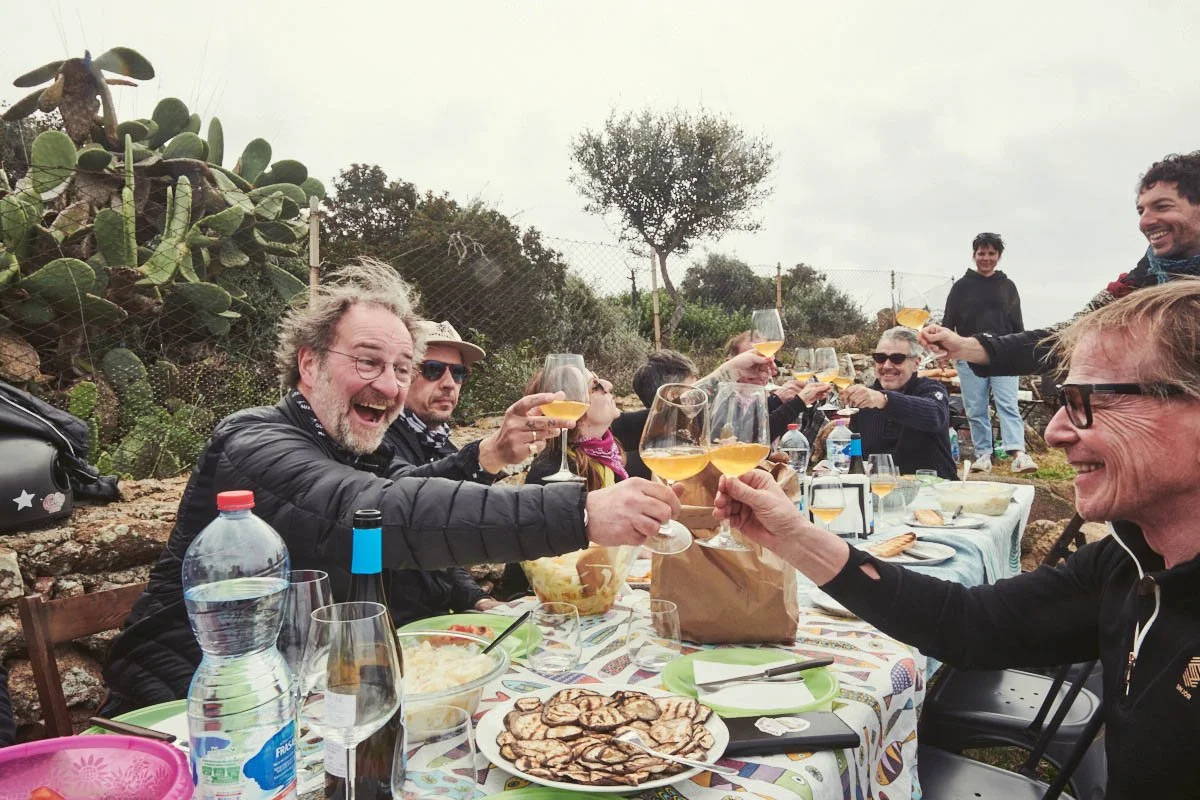
A lunch overlooking the on Giglio Island, Tuscany.
Why Food Is Central to Any Motorcycle Tour of Italy
There's a reason our guests always seem to eat better on tour than they do at home. It's not just the food — though the food is extraordinary. It's that hours on a motorcycle make you genuinely present. You've been in the landscape, not passing through it behind glass. You've felt the temperature drop as you climbed into the mountains and rise again as you came back down to the coast. You've smelled the pine, the wild herbs, the salty sea breeze. By the time you take your helmet off and walk into a trattoria, you are not a tourist ticking off a lunch stop. You are ready — for the food, the company, the unhurried hour. In my experience, that is when Italy feeds you best.
The Philosophy Behind Italian Food Culture
Eating in Italy is not about refuelling. It is about gathering. The table in an Italian home or restaurant is where life actually happens — where news is shared, where arguments are settled, where hours pass without anyone noticing. I was reminded of this not long ago at an agriturismo in Tuscany called L'Arte dei Semplici, where we stayed with a group of guests for dinner. The owners make their own pasta, their own wine, grow their own vegetables. An English couple on the tour were pleasantly surprised when the first pasta course arrived. Afterwards they asked what was in it. I told them: flour, eggs, and a kitchen that has been doing this for generations. They stayed long after the others had gone, talking with the owner over glass after glass of the estate wine, not wanting the evening to end. That is Italian food doing exactly what it is supposed to do.
What makes Italy so extraordinary for food tourism — and specifically for motorcycle food tourism — is the combination of climate, geography and culinary heritage. The warm months produce extraordinary fruits and vegetables. The sun builds sugars in the grape across a country that stretches from the cool Alpine foothills to the sun-baked deep south, generating wines of genuinely dramatic variety. Add to this a culinary history stretching back through the Romans and Etruscans, absorbing influences from Greek, Arabic and Egyptian civilisations along the way, and you begin to understand why this country eats the way it does.
“At the Italian table, it is never a race. The food is the excuse for the gathering, and the gathering is the real point. This is something you understand quickly on a motorcycle tour of Italy — and something that changes the way you travel.”
Seasonal Cooking and Why It Matters on Tour
One of the things I always explain to guests before we set off is that Italy, in the best kitchens, still cooks seasonally. Not as a marketing claim — as a simple fact of life. Visit in spring and you will find artichokes and asparagus. Come in late summer and the menus shift to tomatoes so ripe they need nothing but salt and olive oil. This is not nostalgia; it is the reason the food tastes as good as it does. It is also why we research what is in season on every tour before we go, and why the restaurants we visit are chosen partly for their commitment to ingredients that are grown nearby and picked at the right moment.
This philosophy is rooted in necessity as much as tradition. Many of Italy's most iconic dishes were born from poverty — pizza began as flour, water, tomato and basil, eaten as street food in my home city of Naples. The carbonara, the ribollita, the arrosticini — all products of making something magnificent from very little. That ingenuity is still the backbone of Italian cooking, and it is still the reason a small trattoria down a back street can produce food that no Michelin-starred kitchen can replicate.
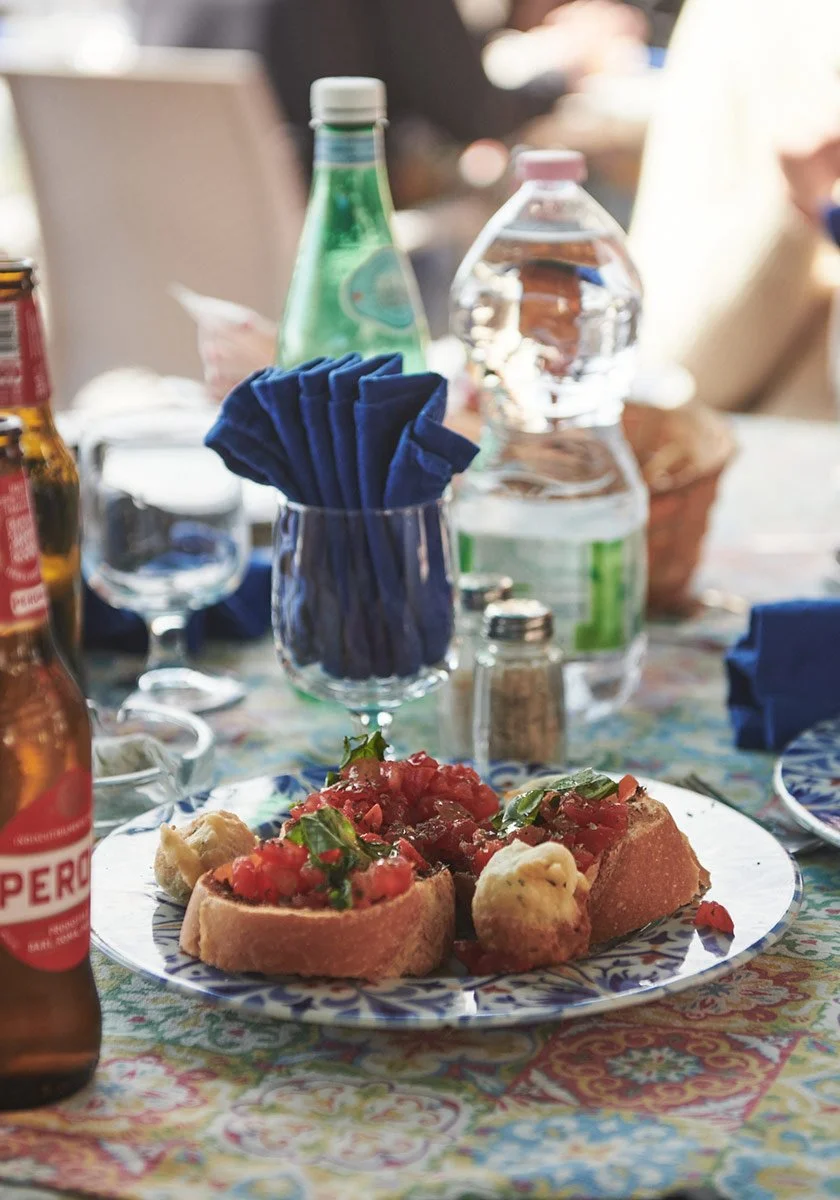
Bruschette e Zeppoline starter
Local fresh tomatoes and basil on sourdough, together with fried balls of dough filled with seaweed are hard to beat on the Amalfi Coast.
Italy's Best Food Regions for Motorcycle Touring
One of the most common questions I get from people planning an Italian motorcycle touring holiday is: which region has the best food? The honest answer is that they all do — just differently. Italy is not one cuisine. It is a mosaic of distinct regional food traditions, each shaped by local geography, climate and history, and each worth exploring on its own terms. Below is what we eat, where we eat it, and why it matters on each of our routes.
Sardinia Motorcycle Tour: What to Eat and Where
Sardinia's food is shaped by both land and sea — sheep have grazed its mountains for millennia, while the surrounding waters have always fed its coastlines. Malloreddus — small ridged semolina pasta, sometimes called Sardinian gnocchi — is typically served with a slow-cooked lamb or pork ragù (alla Campidanese) and a sharp dusting of pecorino sardo (local sheep cheese). It is simple, direct and genuinely delicious. Fresh fish and seafood are always available at all restaurants we visit on the coast. The suckling pig, porceddu, is the island's great celebratory dish: traditionally cooked underground on a bed of myrtle and juniper, or slow-roasted on a spit, until the meat reaches a tenderness that is almost impossible to achieve any other way. Alongside a glass of Cannonau — the island's principal red wine, structured, tannic and ancient — it is one of the most satisfying meals you can eat in Italy.
One of my most memorable meals anywhere on our tours was at Corte Barisone in Dorgali, deep in the Barbagia. I had their handmade Anzelotto — a local ravioli filled with a mixture of sheep and cow cheese and wild chard, served with a traditional Dorgalese sauce of slow-cooked tomato, beef and pork. It was one of those dishes that quietly stops the table - when the conversation quietens down, you know the food is pretty amazing.
What strikes me every time I return is how much Sardinian cooking varies even within the island. The same dish, prepared twenty miles apart, can taste meaningfully different — a reflection of local pride that runs deep. When on tour we seek these distinctions out deliberately, making sure meals are always varied and never repetitive, while visiting family-owned restaurants that source locally and cook to tradition rather than expectation.
→ Sardinia Motorcycle Tour — routes, dates and what to expect
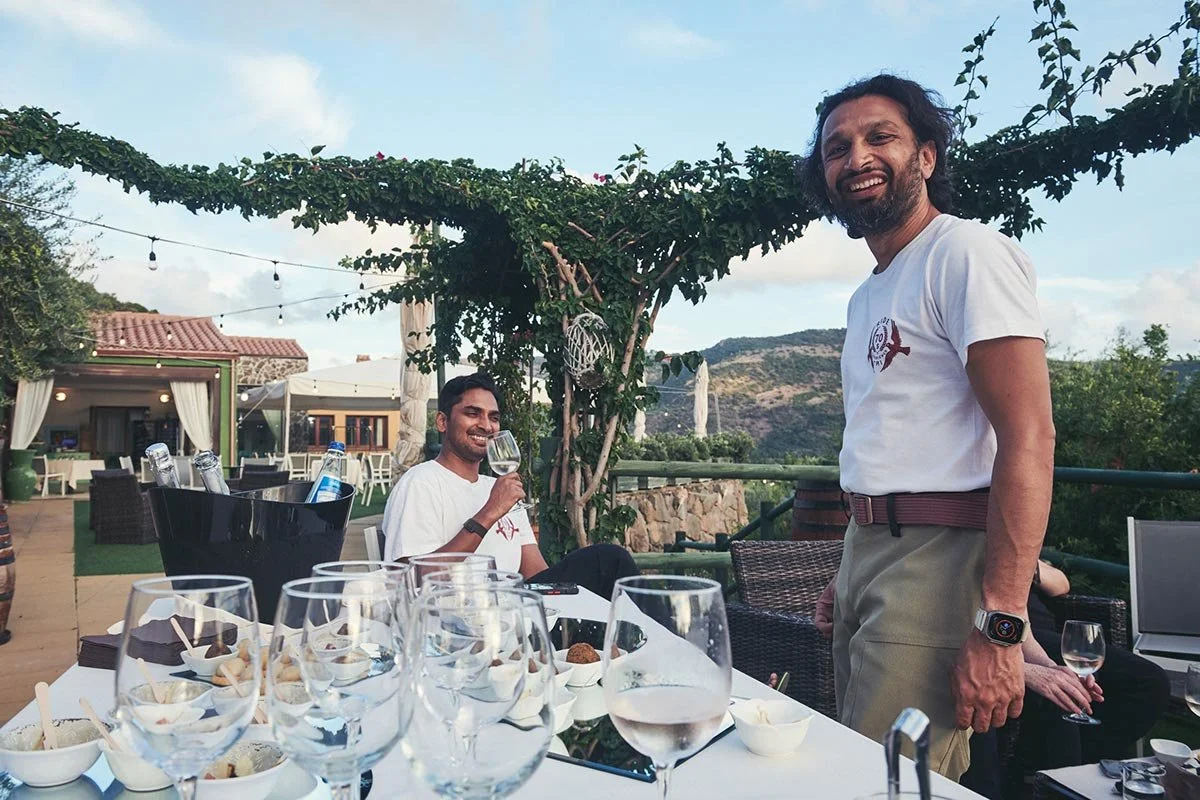
A welcome aperitivo and snacks at a lovely Sardinia Agriturismo.
Amalfi Coast Motorcycle Tour: Seafood, Pasta and Coastal Cuisine
The Amalfi Coast is one of the most extraordinary motorcycle roads in the world — narrow, dramatic, constantly shifting between cliff face and sea view — and the food that comes out of this coastline is as vivid as the scenery. The sea dominates everything here, and the best kitchens treat what comes out of it with a light, confident touch.
The dish I always look forward to most is Scialatelli ai frutti di mare — a thick, short pasta made fresh by hand, served with whatever seafood the morning brought in. It is the kind of dish that really makes sense eaten here, within reach of the water it came from. Another favorite are the alici di Cetara and their ‘colatura’ — an ancient and simple delicacy of anchovies from the small fishing village of Cetara, just along the coast. Fished in spring and immediately cured with salt, they go through a slow fermentation process and produce the iconic colatura, an intensely flavoured amber juice that bears no resemblance to anything you have eaten from a tin. They are used across the region as a seasoning, a condiment, and a dish in their own right, and once you understand what a properly cured anchovy tastes like, you will never look at the tinned variety the same way again.
The cheeses of this stretch of coastline deserve equal attention. Mozzarella di bufala — made from the milk of water buffalo grazed on the plains just inland — is a world away from anything sold under that name in a supermarket abroad: milky, yielding, almost liquid at the centre. Equally special is provola di Agerola, a lightly smoked stretched-curd cheese produced in the mountain village of Agerola, barely a stone's throw from the coast road. Eaten together, on a pizza, or alongside ripe local tomatoes and good olive oil, they are really the golden treasure of this region.
For dessert, the Amalfi Coast has two things you should not leave without trying. The Delizia al Limone — a dome of soft sponge soaked in limoncello cream and filled with lemon custard — is the region's signature dolce, and when made well it manages to be simultaneously rich and intensely fresh. The Torta Caprese, a dense flourless chocolate and almond cake originally from the island of Capri just across the water, is its darker, more serious counterpart.
A word on the Ragù Napoletano: this magnificent slow-cooked meat sauce — built over six to twelve hours until the meat dissolves entirely into the tomato — is a Naples tradition, and a Sunday staple in many local families, including mine. You will find it in the city, particularly at places like Osteria la Mattonella between the Spanish Quarter and Chiaia, but do not expect it as a matter of course along the coast itself. In Naples it is practically a religious event. On the Amalfi Coast, the kitchen looks to the sea.
Mimì alla Ferrovia — Naples
For me, no visit to Naples on the Amalfi tour is complete without dinner at Mimì alla Ferrovia, located in the train station quarter. This institution — now run by the descendants of the original Mimì, whose son is in his eighties — is exactly what a great Neapolitan restaurant should be: walls covered in photographs of Italian actors and visiting heads of state, a focused menu of what is excellent rather than what is extensive, and cooking that makes you understand why people travel to this city purely to eat. As a Neapolitan myself, walking in here feels like coming home.
Osteria della Mattonella - Naples
Tucked into a quiet street in the Spanish Quarter, the Osteria della Mattonella has been feeding Neapolitans since 1978 — first as a wine and olive oil shop, then as the no-frills osteria it has been ever since. The room is small, with wooden beams, an original tiled floor and shelves lined with bottles from floor to ceiling. It is run today by Massimo Marangio, whose mother Antonietta still oversees the kitchen — and it shows in every dish. The menu changes daily, written by hand, and what comes out of that kitchen is the kind of Neapolitan home cooking that most visitors to the city never get close to: Genovese sauce slow-cooked over rigatoni until the onions have melted into something rich and almost sweet, pasta with potatoes and provola, polpette, octopus alla Luciana. The Ragù, when it appears on a Sunday, is the real thing. Reservations are essential and not always easy to get — which, in Naples, is usually the best possible sign.
Trattoria San Gennaro - Praiano
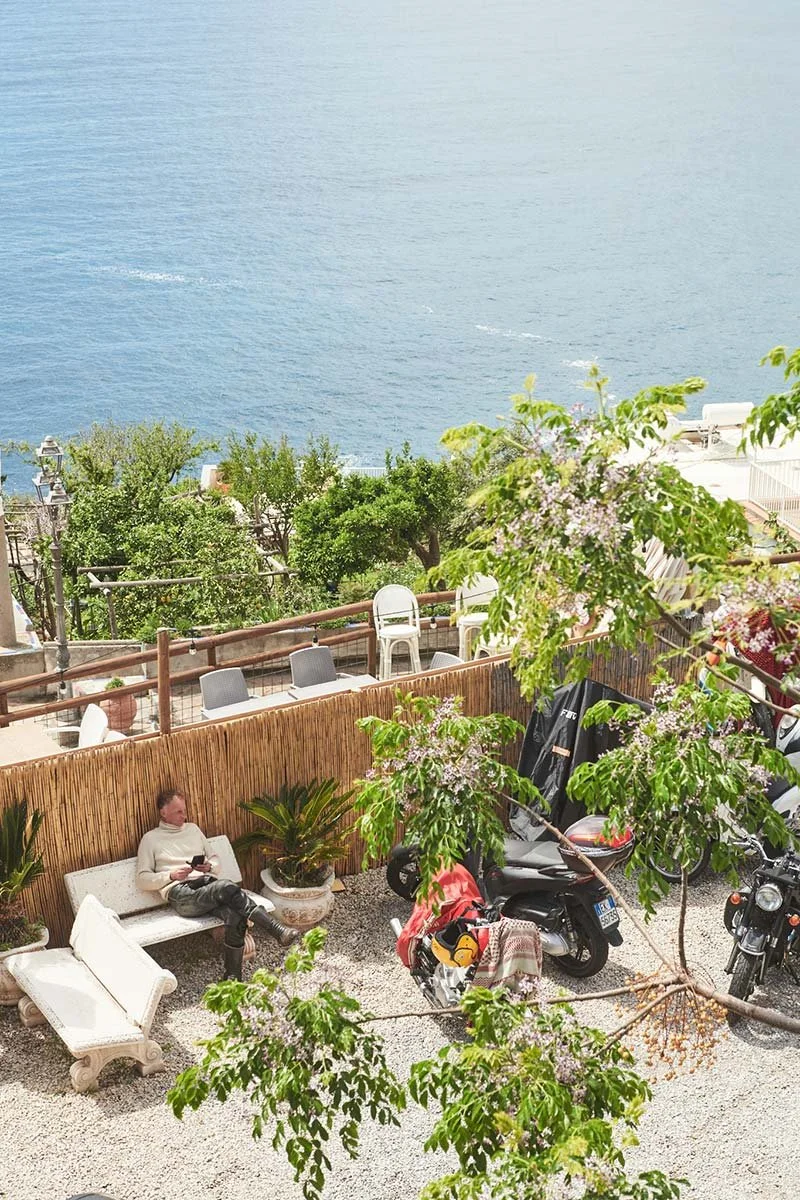
Perched above the sea in Praiano, midway along the coast road, this family run trattoria is a favourite stop on our Amalfi run. The terrace overlooks the water, the service is always kind and fun, the ingredients are visibly fresh and sourced locally, and the kitchen has the rare confidence to let those ingredients speak for themselves. It also has secure private parking for motorcycles and cars and it won’t break your bank — a genuine rarity on the Amalfi Coast — which makes it a natural and effortless stop on two wheels.
Ride one of Europe's great coastal roads:

Tuscany Motorcycle Tour: Wine Roads, Bistecca Fiorentina and the Chianti Hills
A Tuscany motorcycle tour is, among other things, one of the great wine journeys in Europe. The roads through Chianti Classico, the Val d'Orcia and Montalcino were seemingly designed for riding — smooth, winding, lined with cypress and vine — and what waits at the end of them is some of the finest food and wine in Italy.
The centrepiece of Tuscan cooking, for me, is the Bistecca Fiorentina — a T-bone cut from the large Chianina cattle breed, always over a kilogram, always served rare, with nothing more than flaked sea salt and a thread of olive oil. I ate one not long ago on the terrace at Oltre il Giardino in Panzano, looking out over the hills with a glass of Chianti Classico. The steak arrived simply presented and perfectly cooked — that red centre, a crust that gave with the gentlest pressure, rich and tender in a way that makes you reconsider every other steak you have ever eaten. These are the moments guests bring up years after the tour has ended.
The Tuscany table is not only about meat, of course. Fresh pastas, cured meats, wild boar ragù, ribollita — the bread and bean soup that improves every time it is reheated — and some of the most celebrated wines in the world. At the Padelletti Winery in Montalcino, one of the oldest family estates in the region, a terrace tasting with views across the valley is the kind of experience that no description quite prepares you for. We also love Osteria Mangiando Mangiando in Greve in Chianti — unpretentious, one of the smallest restaurants you’ve ever seen, always full and consistently excellent, and exactly the kind of place that makes riding through Tuscany feel like the privilege it genuinely is.
→ Road to Tuscany Motorcycle Tour — Chianti, Brunello country and the Fiorentina
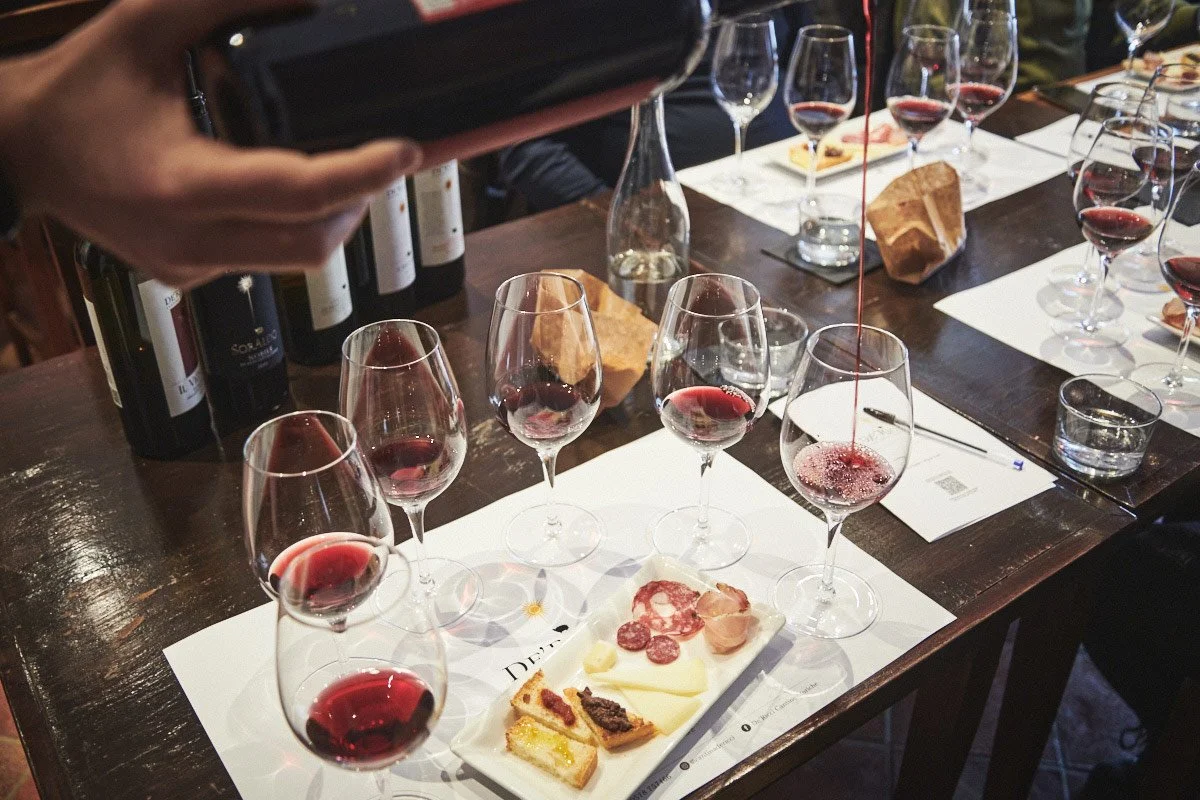
A wine tasting in Tuscany
Gran Sasso and Abruzzo Motorcycle Tour: Mountain Food, Arrosticini and Ancient Traditions
Riding up into the Gran Sasso massif — the highest peak in the Apennine range — you enter a different Italy: quieter, older and less visited by mass tourism. The landscape here has changed very little in centuries, and the same is true of the food. Sheep and cattle have grazed these mountains for millennia, and the culinary traditions reflect this with a directness and simplicity that feels almost timeless.
Arrosticini are one of the defining foods of Abruzzo and unsung dishes of Italian cuisine: small skewers of sheep meat, cut into tiny cubes and cooked over dedicated elongated charcoal grills called furnacelle until the outside chars and the inside stays tender. They are the kind of food that seems almost too simple to justify the fuss — until you taste them. Then you understand.
Another excellent dish one must try in Abruzzo are the Spaghetti alla Chitarra, named so from the guitar shaped tool used to cut and give the pasta their square shape and porous texture, which is a perfect match to its usual sugo alle pallottine, a delicious sauce with tiny meatballs of mixed meat.
Ristoro Mucciante — Campo Imperatore
High on the Gran Sasso plateau, near the Campo Imperatore research station at around 2,000 metres, sits one of the most singular eating experiences anywhere on our tours. Ristoro Mucciante is, on the surface, a butcher's shop and cheese counter. You choose your cuts — arrosticini, lamb chops, cheeses, cured meats, bread, pickled vegetables — and then take them outside to grill on the communal charcoal barbecues that are kept burning for guests throughout the day. The plateau stretches out around you, the air is clean, the wine is poured. Every single guest or friend I have brought here was surprised when they realise what kind of place this is. It is as honest as food gets.
→ Gran Sasso and Abruzzo Motorcycle Tour — the roof of the Apennines

Riding on the beautiful Gran Sasso plateau, with the highest Apennines peak called Corno Grande visible in the distance.
Sicily Motorcycle Tour: Seafood, Street Food and the Perfect Cannolo — Coming 2027
After a 2 years break, our Sicily motorcycle tour will finally come back for 2027, launching as early as this Spring. Sicily has been on my list for a long time, and the route we have built does justice to both the extraordinary riding and the island's unique culinary identity — a cuisine shaped by Greek, Arab, Norman and Spanish influences over two thousand years, producing food that is unlike anything else in Italy.
What makes Sicilian food so distinctive is how completely the island absorbed every civilisation that passed through it and made the result entirely its own. You taste the Arab kitchen in savoury dishes spiced with saffron and cinnamon, in the sweet and sour of a proper caponata, in street food like arancini and panelle that have been eaten this way for centuries. The seafood is some of the finest in the Mediterranean. And the desserts — a cannolo freshly filled to order, a granita eaten for breakfast with a warm brioche bun — are in a category of their own.
I want to tell you about a guest from one of our earlier tours who, for me, captures everything I love about taking people to eat well here. A Canadian on his first time on the island, from day one he was literally captured by the amounts of seafood pasta and fresh fish available — the clarity of the flavours, the freshness of the catch, the way everything tasted of the sea. But his real obsession was the cannolo. At every stop, at every village, he would disappear and gloriously return with one. We teased him. He was entirely unapologetic.
On the very last riding day, we stopped at a bakery that has been making cannoli for generations. He walked in, looked at the counter, and simply smiled. That was the moment. He has come back to tour with us every single year since 2023, on a different route each time. I like to think a cannolo in Sicily started everything.
The Sicily tour will be announced on our website this Spring. If you would like to be among the first to know, sign up to our newsletter here and we will make sure you hear about it as soon as it goes live.
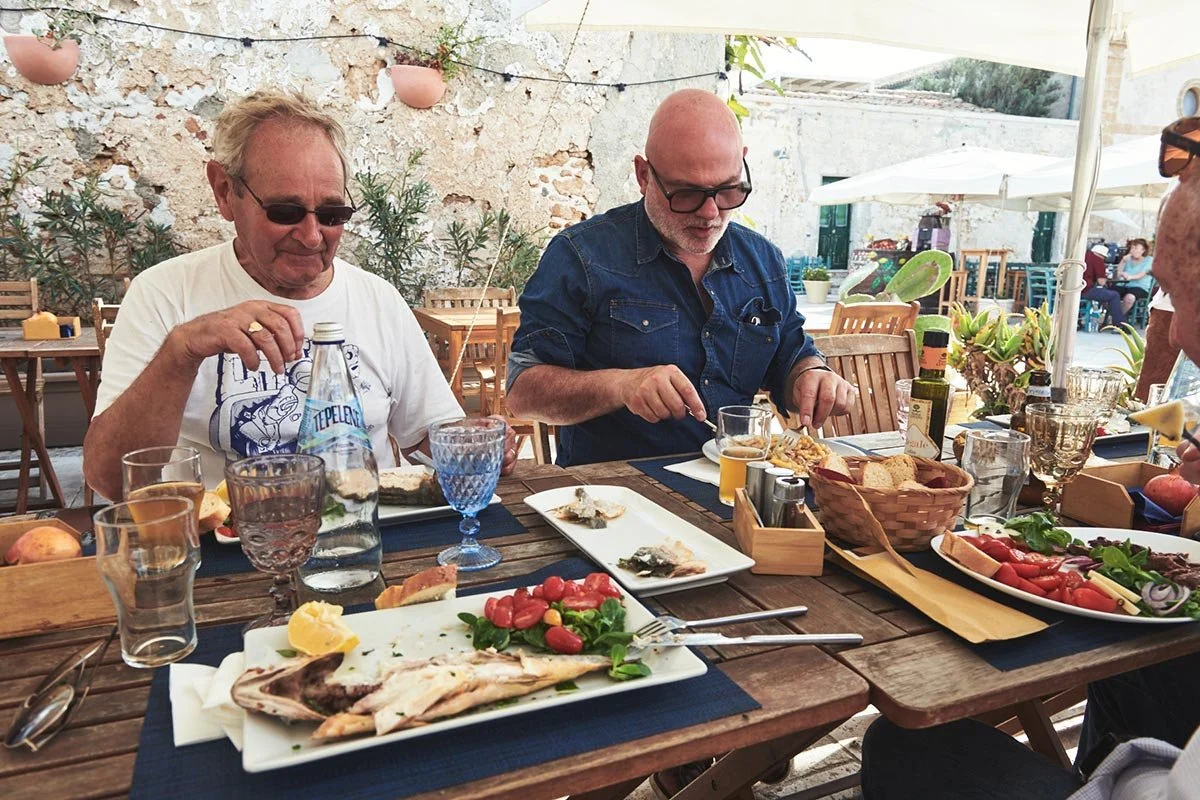
A terrace lunch of grilled fish in Sicily.
How to Eat Brilliantly in Italy: Practical Advice From Someone Who Grew Up There
After decades of riding and eating across Italy, I have strong opinions about how to get the most from the food here. Some of these I learned growing up in Naples. Others I learned the harder way. Here is what I tell every guest before we set off, and what I would tell anyone planning an Italian food and motorcycle tour of their own.
Take Your Time — the Meal Is Part of the Journey
Italian dining is not compatible with a tight schedule, and trying to rush it is one of the most common mistakes visiting riders make. On our tours, we build proper time into every day to sit down and eat well - lunch breaks are usually one and a half to two hours. If you are genuinely pressed, seek out a good paninoteca — a sandwich shop with fresh ingredients visible at the counter — rather than eating badly in a hurry. But wherever possible: sit down, order without rushing, and let the meal come to you.
Order the Things You Don't Recognise
The classics — carbonara, parmigiana, spaghetti alle vongole — earned their reputation and are worth eating in the regions where they belong. But do not let familiarity narrow your choices. Some of the most memorable things I have eaten on tour were the less obvious dishes: pasta e fagioli con cozze in Naples (pasta with beans and mussels, a truly delicious surprise), Acquacotta in the Tuscan Maremma, the Anzelotto with wild chard in Dorgali that I described earlier. Order the unfamiliar. Ask the waiter what they would choose today. Be curious — you will be rewarded generously.
The Best Italian Restaurants Are Usually Not the Most Obvious Ones
This is perhaps the most important piece of advice I can give. Online reviews have their uses, but a restaurant that has coasted on five-star ratings for five years may be living off its reputation. A forty-cover family-run place with little social media presence, a handwritten daily menu, and a dining room full of older locals is almost always producing more interesting food. Look at who is eating there. A table of Italian nonnas is worth ten Tripadvisor stars.
Prime locations — the square facing the famous cathedral, the clifftop terrace with the postcard view — will always attract a crowd, and there is nothing wrong with eating in them occasionally. But if flavour is your priority, look one street back. The real cooking almost always happens away from the view.
Stay at Agriturismos Whenever You Can
On our motorcycle tours through Italy, we frequently choose to stay at traditional agriturismos — working farm estates offering accommodation and meals from their own produce. When they are family-run, and when the grandmother is in charge of the kitchen, the results can be extraordinary. I grew up watching my own nonna cook, and I know what that kind of cooking looks and tastes like. It cannot be faked, and no amount of professional kitchen training fully replicates it. When you find it, order everything, eat slowly, and stay as long as they will let you.
Ask a Local — Not a Tourist Board
When you are on your own for lunch and the recommendations in your travel pack do not have an answer, ask someone nearby. A shopkeeper, a person walking a dog, a mechanic outside a garage — they will direct you to somewhere they actually eat, not somewhere they assume you want. In a lifetime of eating across Italy, this approach has never once failed me.
“When you are touring with us, just ask. Finding exceptional food in places that feel genuinely discovered rather than prescribed is one of the things we care most about — and one of the things we do best.”
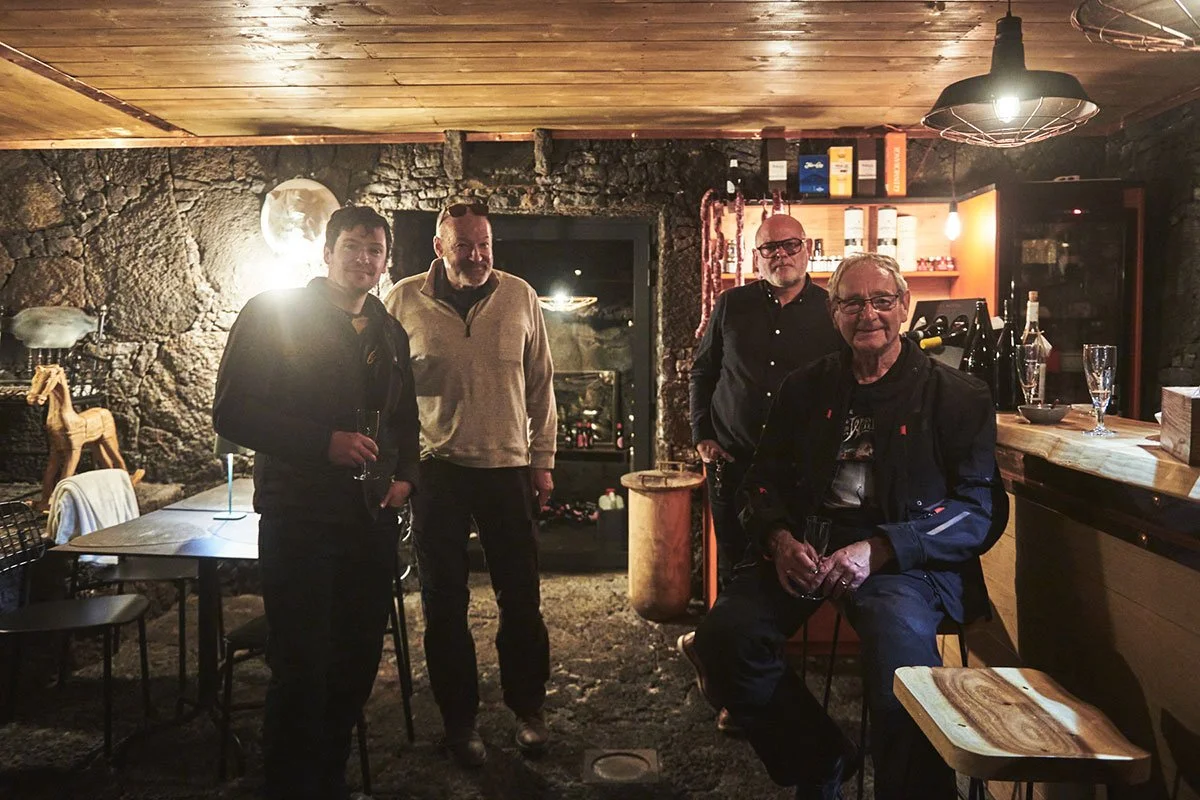
When your guide is the local — aperitivo in an underground wine cellar carved from the volcanic rock of Mount Etna.
What is the best region in Italy for food on a motorcycle tour?
Every region has its own distinct culinary identity, but for sheer variety and quality, Campania (the Amalfi Coast and Naples), Tuscany and Sardinia consistently produce the most memorable eating on our tours. Campania offers some of the finest seafood and pasta in the country. Tuscany excels in wine, cured meats and the legendary Bistecca Fiorentina. Sardinia has ancient, highly regional dishes — particularly suckling pig and handmade pastas — that are unlike anything elsewhere in Italy. Abruzzo and the Gran Sasso region are less visited but extraordinary for meat-based mountain food, particularly arrosticini.
Can you eat well on a motorcycle tour of Italy without speaking Italian?
Entirely, yes. The best Italian restaurants — especially family-run trattorias and agriturismos — are accustomed to welcoming guests warmly regardless of language. A willingness to point at the menu, accept the recommendation of the day, and eat what arrives with genuine enthusiasm will take you a very long way, as well as Google Translate. On our guided tours, we handle all of this for you and also provide a curated list of recommended restaurants for when you are eating independently.
What are the must-eat dishes on an Italy motorcycle tour?
It depends heavily on the region, but across our routes, the dishes not to miss include: Malloreddus pasta with pork ragù in Sardinia; Scialatelli pasta with seafood and Ragù Napoletano on the Amalfi Coast and in Naples; Bistecca Fiorentina and fresh pappardelle with wild boar in Tuscany; Arrosticini in Abruzzo; and — coming in 2027 on our new Sicily tour — fresh seafood pasta, caponata and cannoli.
How does All Routes Italy choose the restaurants on its tours?
Personally and carefully. Every restaurant we recommend has been visited, eaten at and revisited multiple times. We prioritise family-run places with a genuine commitment to seasonal, locally sourced ingredients over tourist-facing establishments in prime locations. We also favour places where the owner or their family is present and cooking — because that personal investment always shows on the plate. Many of our best recommendations are places that guests would never have found independently.
Is Italian food on a motorcycle tour suitable for different dietary requirements?
Italy is genuinely one of the more accommodating countries for varied diets, as long as you engage with the kitchen rather than expecting a fixed menu. Vegetarians eat extremely well — pasta dishes, vegetable antipasti, grilled vegetables, cheeses and salads are the backbone of Italian cooking. Seafood-only eaters are well served in coastal regions. Coeliacs should note that pasta and bread are central to Italian food culture, though awareness of gluten intolerance has grown considerably in recent years. We are happy to advise on specific requirements before any tour.
When is the best time of year for a food and motorcycle tour of Italy?
Late spring (May to June) and early autumn (September to October) are the sweet spots — both for riding and for eating. The weather is warm but not oppressive, the roads are less crowded than in August, and the seasonal produce is at or near its peak. Spring brings artichokes, broad beans, fresh herbs and the new olive oil. Autumn brings truffles in Tuscany and Umbria, mushrooms in the mountains, and the grape harvest across every wine region. Summer touring is also excellent but August in particular can be very hot in the south, and some family-run restaurants close for part of the month.
Come to the Table
Italy is one of those rare places where the road and the meal are equally the point of the journey. I have been riding and eating across this country for most of my adult life, and it still surprises me — a dish I have never encountered before, an unexpected wine, a grandmother who comes out of the kitchen to make sure you enjoyed it.
Every route we design at All Routes Italy is built around both the riding and the eating, because for us they have always been the same thing. The landscape you ride through in the morning ends up on your plate at lunch. The culture you absorb on the road makes more sense at the dinner table. Whether you are eating arrosticini on the Gran Sasso plateau, sitting above the Amalfi Coast with a glass of Fiano, tasting a Brunello in Montalcino you will spend years trying to find again, or — very soon — standing in a Sicilian pasticceria with a perfect cannolo in hand, the food is always part of the story.
I would love to take you there.
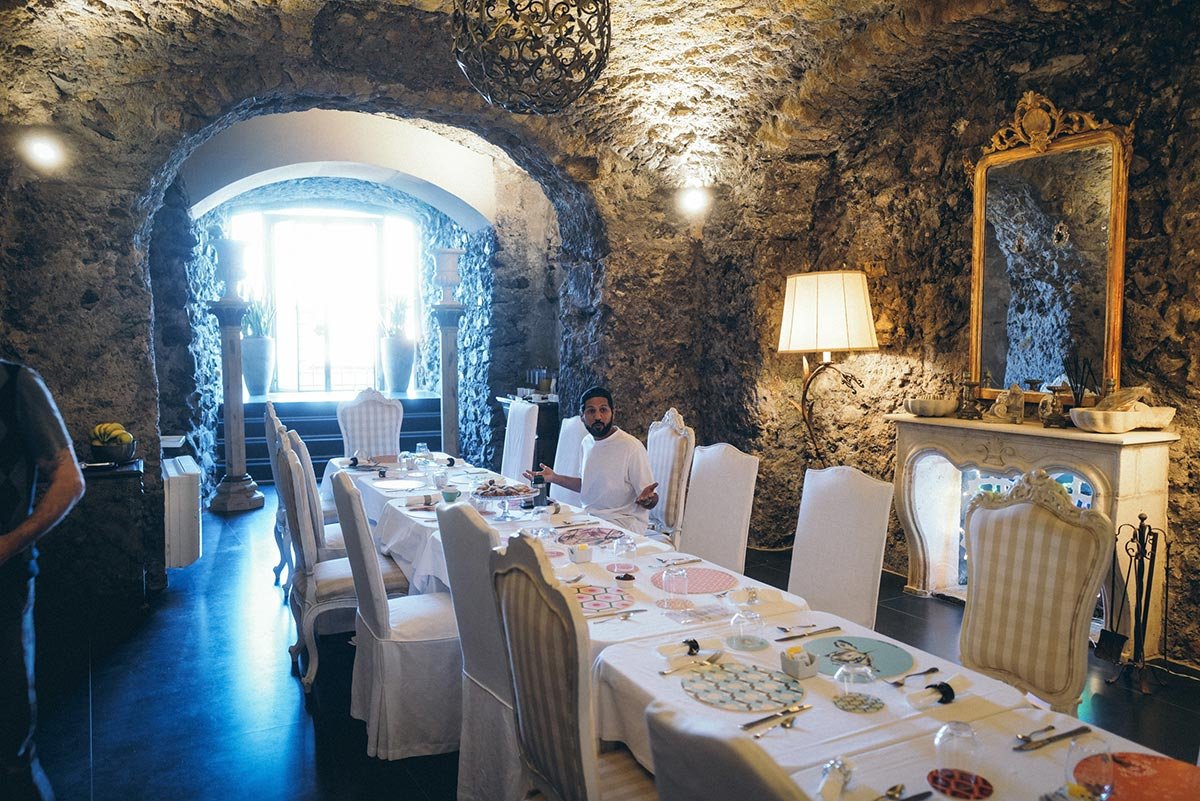
Breakfast in the dining room of our historic palazzo in Ercolano, at the feet of Mount Vesuvius — not a bad way to start a riding day.
Our Motorcycle Tours of Italy
All Routes Italy — find your line, and follow it.