
Motorcycle Tour Italy Packing List: What to Actually Bring
There are two kinds of riders who arrive underprepared for a motorcycle tour in Italy. Those who packed for a different country, and those who packed for a different Italy. The one from the brochure — blue skies, light winds, long lunches. That Italy exists. But so does a mountain pass in the Gran Sasso at altitude with the temperature dropping ten degrees in five minutes, and a beach stop on the Sardinian coast where your luggage is half an hour behind you and the only available swimwear is a pair of fluorescent yellow shorts from a market stall.
Both are fine experiences, for the record. But one requires a bit more preparation.
This guide covers what to bring on a motorcycle tour in Italy — whether you're riding with us at All Routes Italy or exploring independently. The basics apply either way.
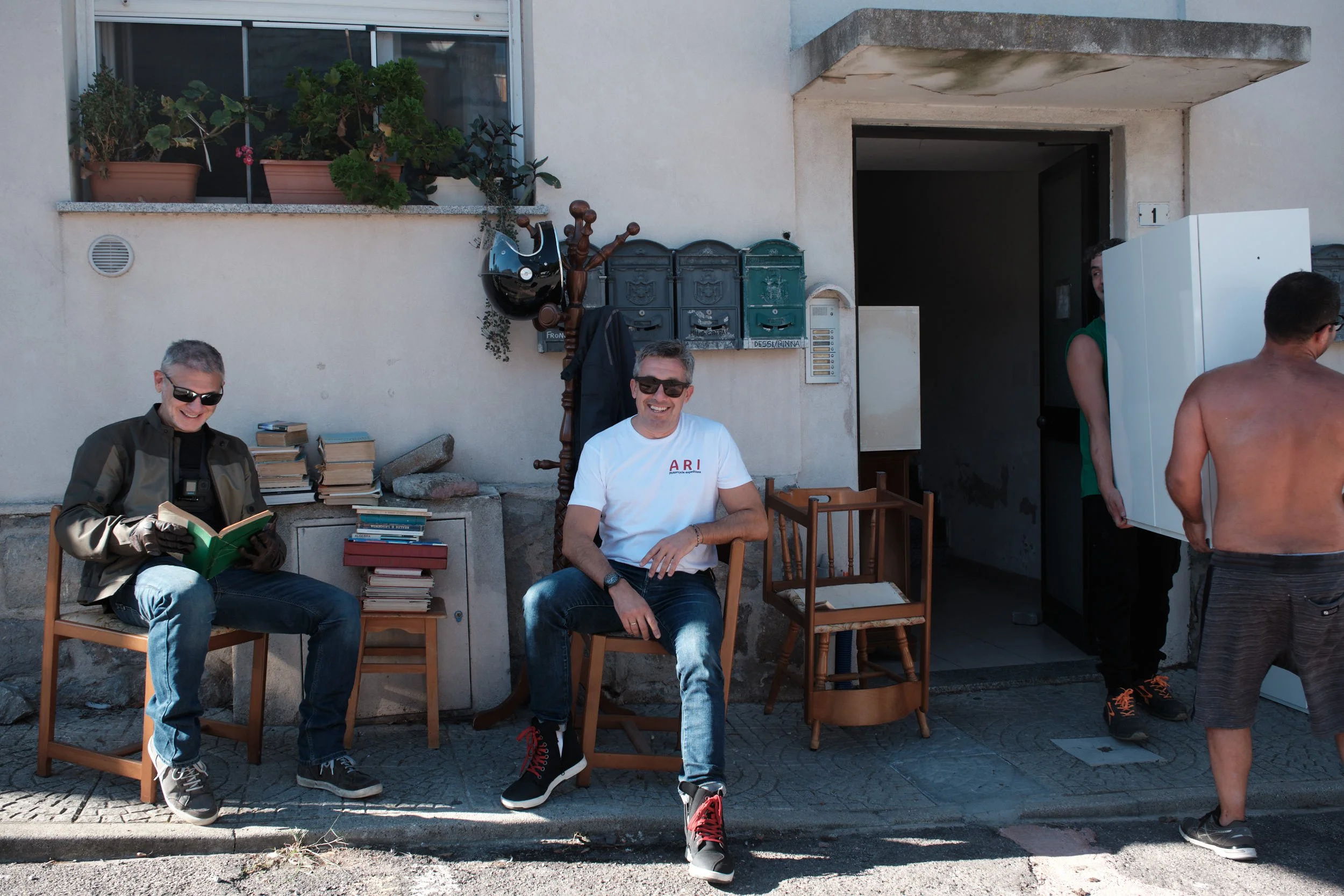
Fun encounters on the Sardinia tour
Documents
Before anything else, sort the paperwork. It's not the exciting part of planning a trip to Italy, but getting it wrong may at some point ruin an otherwise good day.
Passport
You'll need your passport at every hotel check-in — some establishments do not accept foreign driving licenses as ID. With new travel laws across Europe, make sure to have at least 6 months on your passport, or you may be sent back once you land in Italy.
At All Routes we collect passport details from all riders as part of the registration, and submit them to each hotel in advance, so arriving at the end of a riding day means walking straight in rather than queuing at a desk filling out forms. Worth having it on you regardless, but you won't be standing in a lobby after eight hours in the saddle hunting through your bags for it.
Driving licence
Always in your pocket, not in your luggage. Italy requires you to carry it on your person while riding.
If you hold a UK or EU licence, you're covered. Italy recognises both for tourist riding.
International Driving Permit (IDP)
If you're arriving from outside the UK or EU, you'll almost certainly need an International Driving Permit (IDP) alongside your national licence. The version you need for Italy is the 1968 Vienna Convention IDP. Here's where to get it:
🇨🇦 Canada — CAA (Canadian Automobile Association)
🇦🇺 Australia — your state motoring authority: RAC, AAA, etc.
🇳🇿 New Zealand — AA New Zealand
🇦🇪 UAE / 🇸🇦 Saudi Arabia / most other countries — check with your national motoring authority. Rules occasionally change and some countries have bilateral agreements. When in doubt, carry the IDP. It costs very little and takes minutes to arrange.
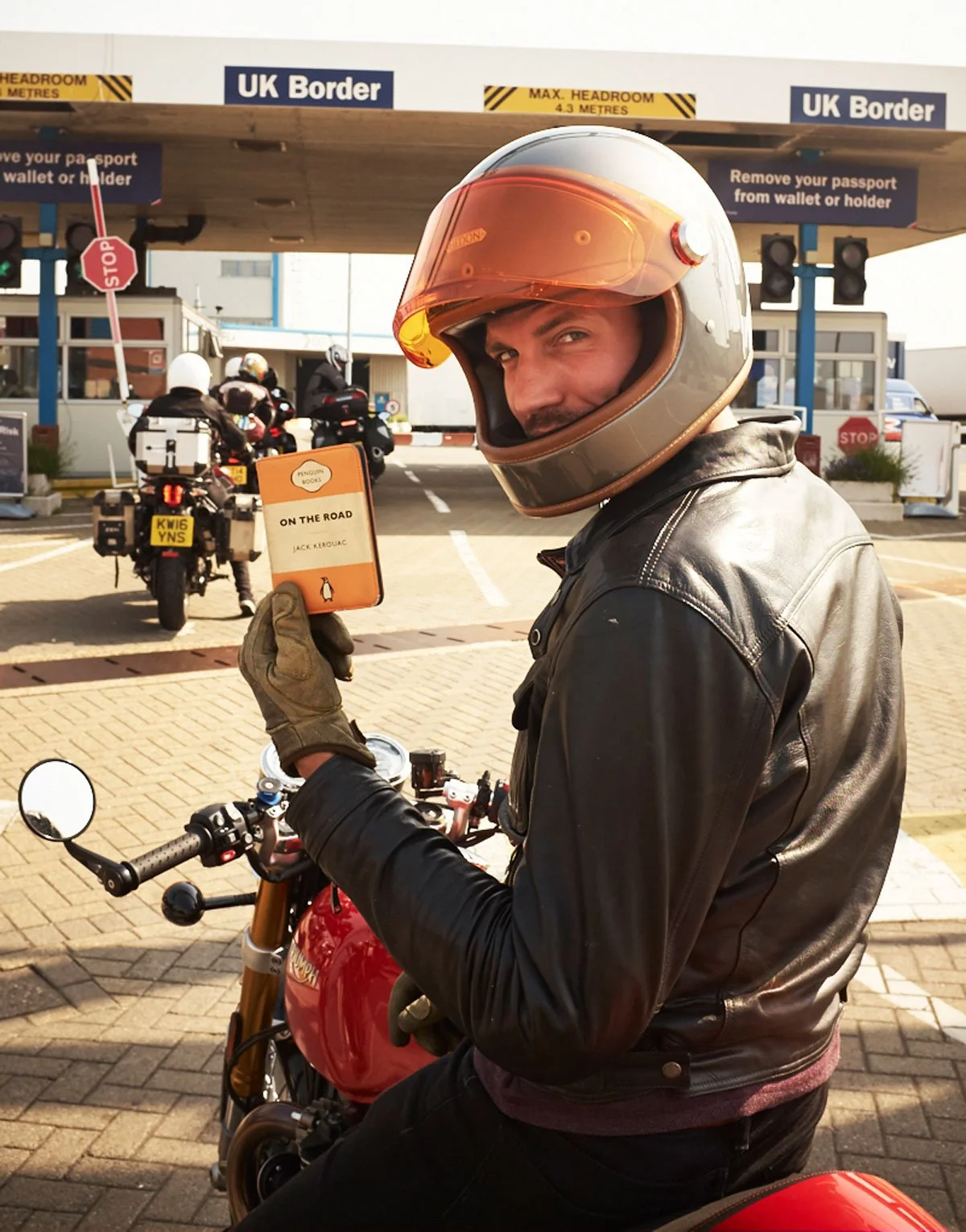
On The Road: the one document no border agent will ever stamp.
Money: don’t get caught out
Two things happen every tour without fail. Someone's credit card gets declined at a petrol station because they didn't notify their bank before travelling. And someone runs out of small change when paying for petrol at a rural autogrill where the automatic machines do not give change to a 50 note.
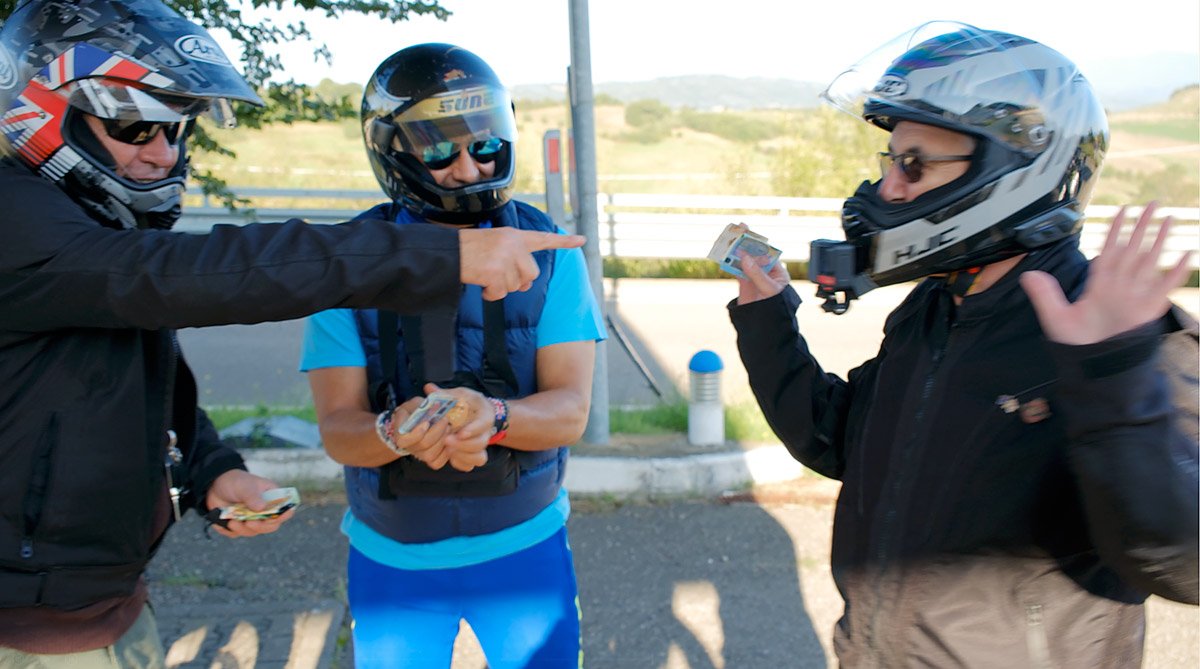
Bring cash in small notes — fives, tens, twenties. Automatic petrol stations, especially outside cities, often don't give change. Tips, coffee, parking, a spur-of-the-moment panino from a roadside salumeria — cash moves faster and smoother in Italy than anywhere else.
Before you leave: call your card provider and pre-authorise foreign transactions. Do it the day before, not the morning of departure.
Navigation: GPX, not Google
Although you can simply follow the tour leader and not worry about the map, we highly recommend having it loaded and visible on your device so that you are always in control, know where you are going, can quickly return to the group if you get it wrong, and best of all you can be independent for a while if you so choose.
At All Routes we send the full tour plan, GPX files and recommended GPX app a few days before departure. Take the time to load them onto your preferred app before you arrive.
Why GPX and not Google Maps? Because GPX follows the route as planned. If you miss a turn, you will realise immediately and get back on the planned route. Google will reroute you onto the fastest or most direct option — which in Italy often means a motorway, a ring road, or simply missing the entire point of the day.
Recommended apps: BikeGPX is our default recommendation for most riders — the interface is minimal, it's straightforward to load a GPX file and follow it, and the core navigation is free. The one thing to know: offline maps (essential if you want full functionality without a data connection) require a small in-app purchase. OsmAnd is the alternative for riders who want full control — it’s what out tour leaders use on tour, and and once set up properly is an excellent tool. The trade-off is a steep learning curve and a paid upgrade to unlock the full feature set. Both are worth the modest cost if you are spending a week riding Italian mountain roads on a phone with an intermittent signal.
Whichever you choose, get familiar with it before you arrive. Download the offline maps for Italy, load one of your GPX files, and follow it for ten minutes at home. It takes very little time and will save you a frustrating moment at a junction on Day 2.
One practical note: if you request a phone mount on our rental bikes, bear in mind they are landscape orientation only. The above mentioned apps can all be used in landscape mode. Check your favourite navigation app also works in landscape mode before you go — not all of them do, and it's an annoying thing to discover at a junction.
If you request a Gaminn with your rental bike, we will load all the necessary maps on the device before departing, and show you how to operate it.
All our rental bikes have a USB socket to charge while riding, so an extra USB charging cable for the bike is worth having. Italian sun on a phone running GPS all day will drain the battery faster than expected.
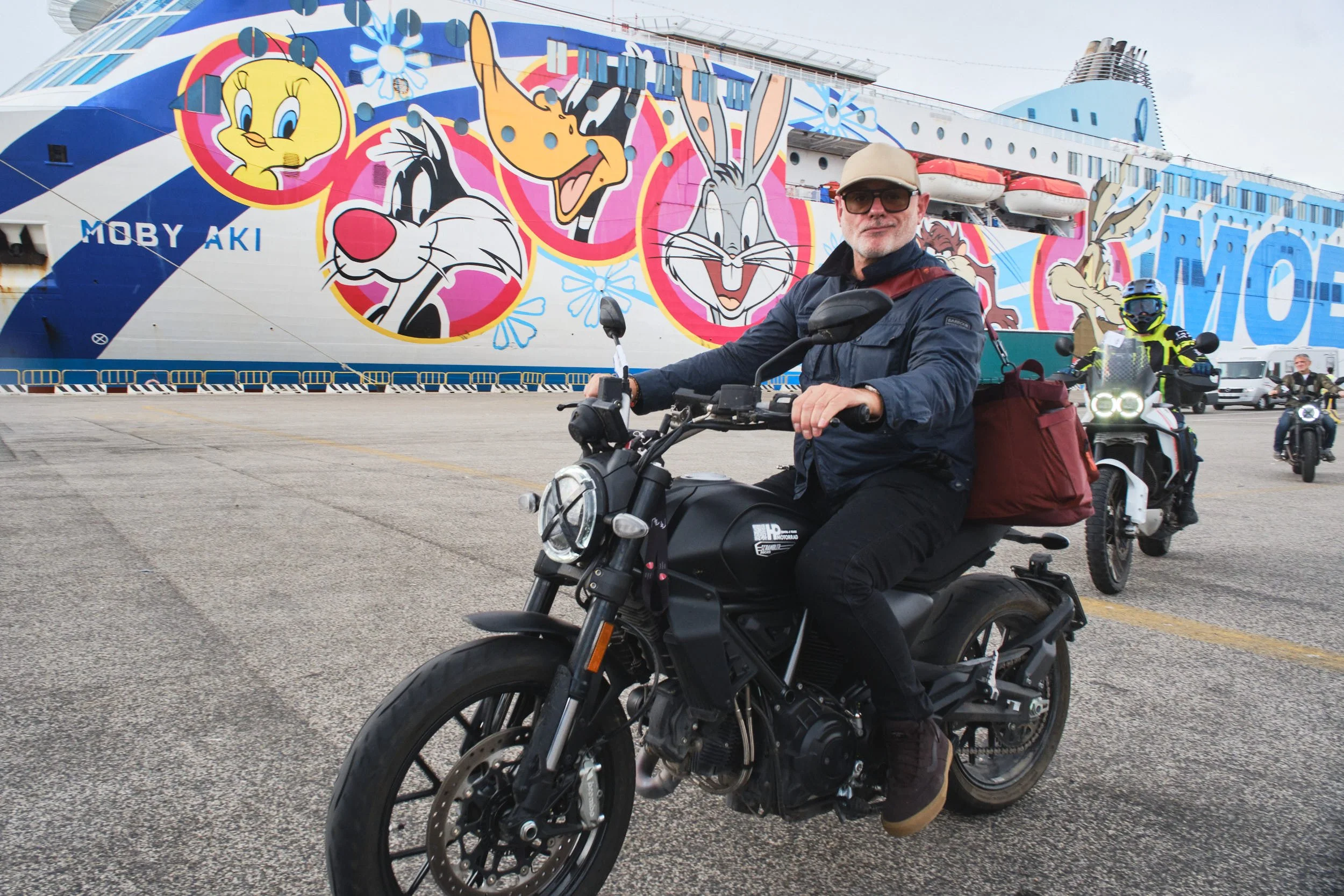
Boarding the Sardinia ferry
Riding Gear
Italy is not the place to show up in trainers and a hoodie. Not because anyone will say anything — Italians are far too polite for that — but because the roads deserve better, and frankly so do you.
Protection
The basics haven't changed: a proper motorcycle jacket with armour at the shoulders and elbows, protective trousers — whether technical riding pants or well-made Kevlar jeans — and boots that cover the ankle. In our opinion these aren't negotiable, whatever the temperature.
Jackets and layers
Italy's riding conditions vary more than most people expect. The Amalfi Coast in July is genuinely hot at sea level. The Gran Sasso tour climbs above 1,500 metres, where it can be cool even in summer and cold with wind chill. Mesh or vented jackets with removable thermal liners are the practical choice for spring and autumn touring. A good leather jacket works across seasons and will never look out of place in the country that invented style — though it earns its keep more on the coastal runs than at altitude. Either way, pack a lightweight mid-layer. It takes up no space and earns its place the moment the road climbs.
Gloves and helmets
Lighter gloves for coastal tours, undergloves or full winter gloves for mountain routes. Open face or full face is personal preference — the weather we ride in on most ARI tours is genuinely kind to open-face riders. No judgement either way.
Waterproofs
Always. Even in August. Rain in Italy arrives fast and leaves fast, and being caught on a mountain pass without them is miserable. Pack them where you can reach them without unpacking the whole bike. After all, if you bring them you won’t need them, but if you don’t…
Intercoms
We don't provide them and don't use them with clients on tour. Riders are welcome to bring their own, but they won’t connect to the tour leader. Riders follow the group/leader or the GPX route independently. No earpiece, no commentary, no one telling you to turn left when you're trying to enjoy a mountain pass. The navigation is sorted. The rest is yours.
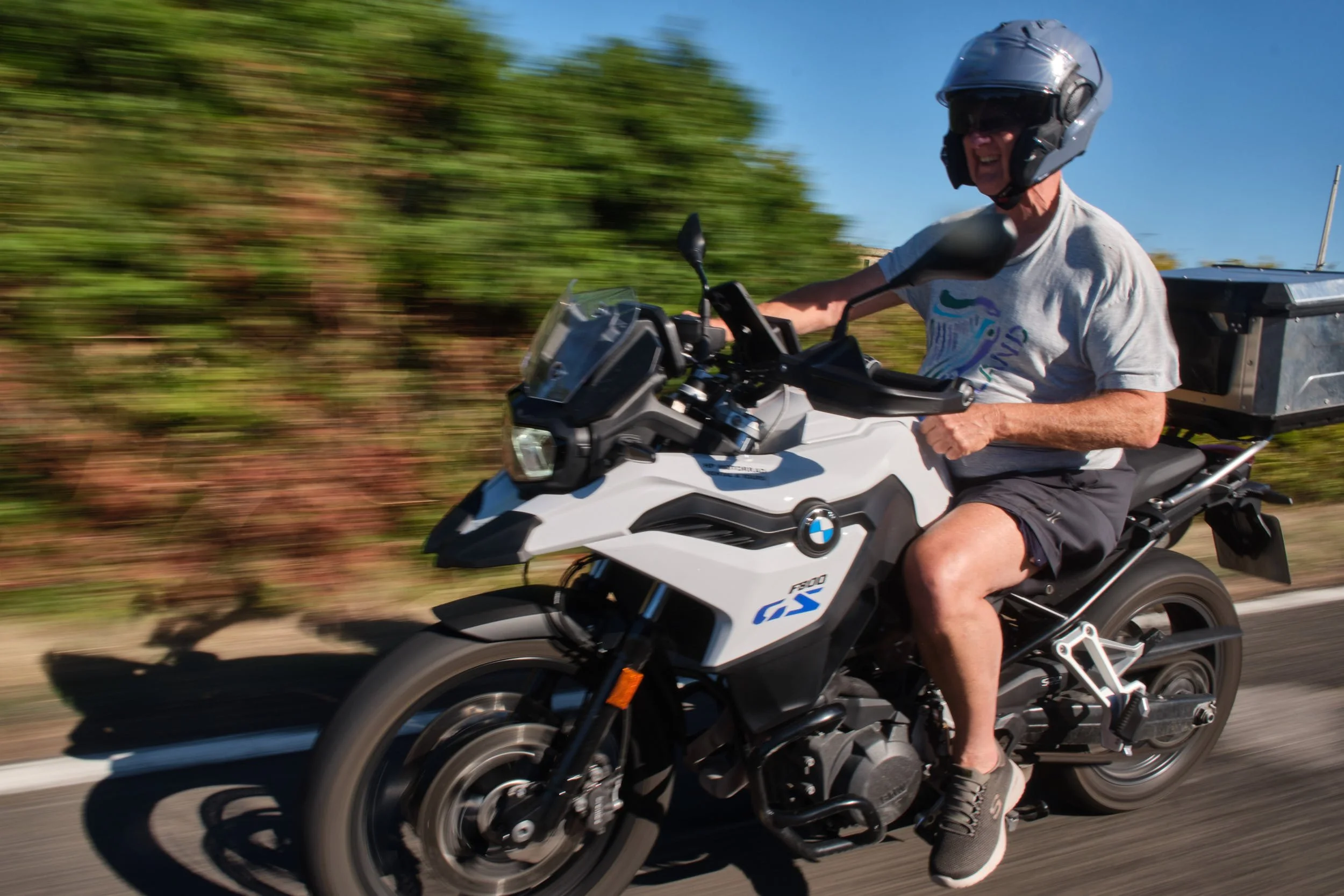
We always advice protective clothing, but you’re a grown up. Ride as you please and smile.
The beach stop
On Sardinia and the Amalfi Coast, there will be swimming opportunities. On some days these are planned stops; occasionally they're spontaneous as they depend on our timing. Either way, swimwear and a small towel in your panniers will serve you well.
Your tour leader is not immune to this particular mistake. On a Sardinian coastal stop, both the client and I had left our swimwear in the van — which was, at that point, considerably further away than the sea. We walked to the nearest alimentari, one of those brilliant all-in-one places with a salumeria counter, beach kit hanging off the walls, and no interest whatsoever in fashion. The shorts were fluorescent yellow. They were the only option. We bought them, along with some exceptional ham and cheese and non alcoholic beer, and had a very good afternoon. The photographic evidence exists and will not be shared.
Keep swimwear and a towel in your panniers. Learn from us.
If you're joining our Tuscany tour, the same applies for the thermal baths.
Suncream — apply it in the morning before you gear up. Neck, arms, and the top of your head if applicable. You will be outside more than you think.
A small water flask on board is worth it. Italy is hot, the riding days are long, and the stops, while excellent, are not always when you need them.
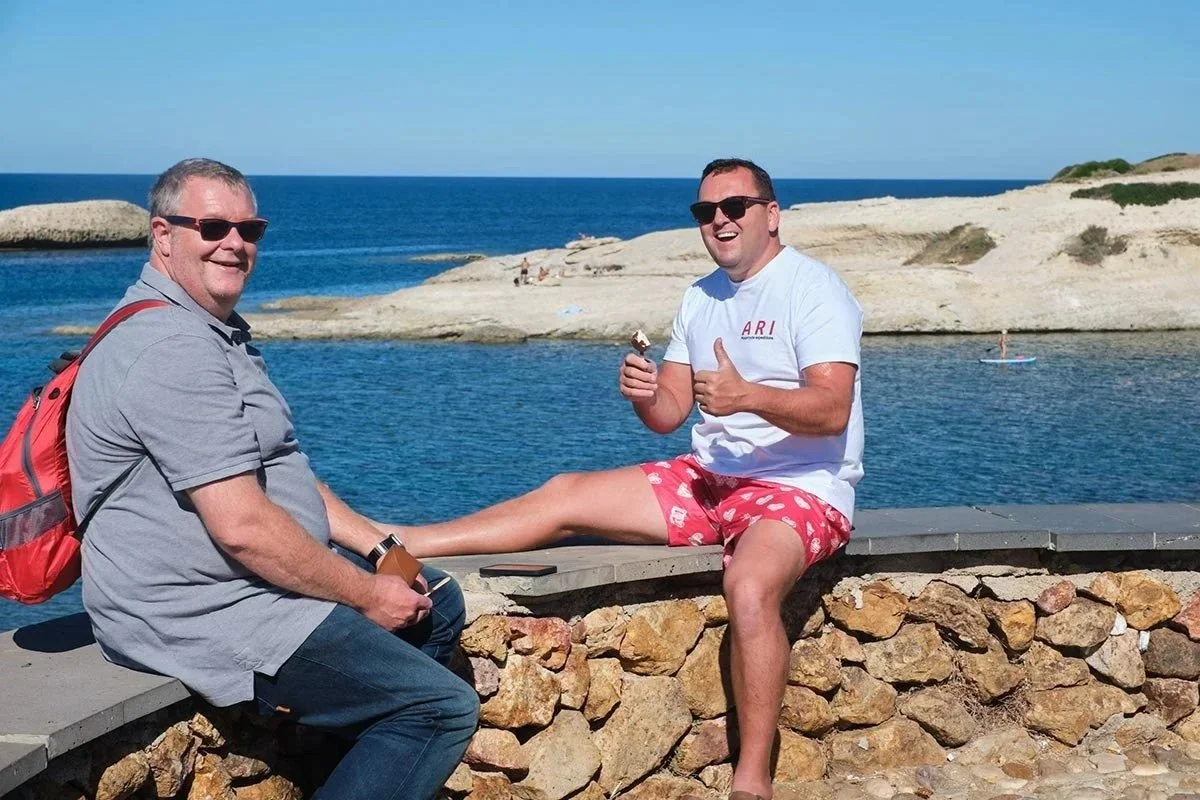
Swim and ice cream at a spectacular location on our Sardinia tour
Health and personal items
Bring whatever personal medication you take regularly, plus anything you might need for minor ailments — pain relief, antihistamine, a basic first aid kit if you travel with one. Italian pharmacies (farmacie) are excellent and widely available, but there's no reason to be searching for ibuprofen in a small mountain town on a Sunday afternoon.
At All Routes we always have a medical kit on our support vehicle.
Bike setup at All Routes Italy
Our rental bikes come with side panniers and a top box as standard. These are enough for daily essentials — documents, layers, camera, snacks, the things you want immediate access to. Main luggage travels in the support vehicle. This can be any size or shape, but to keep things fluid it must be one piece per person.
If you prefer to ride completely unloaded, you can request the luggage removed at booking. Some riders prefer it. Others appreciate the option to carry a bit with them. Both work. As well as carrying a small backpack or strapping something to the back of the bike.
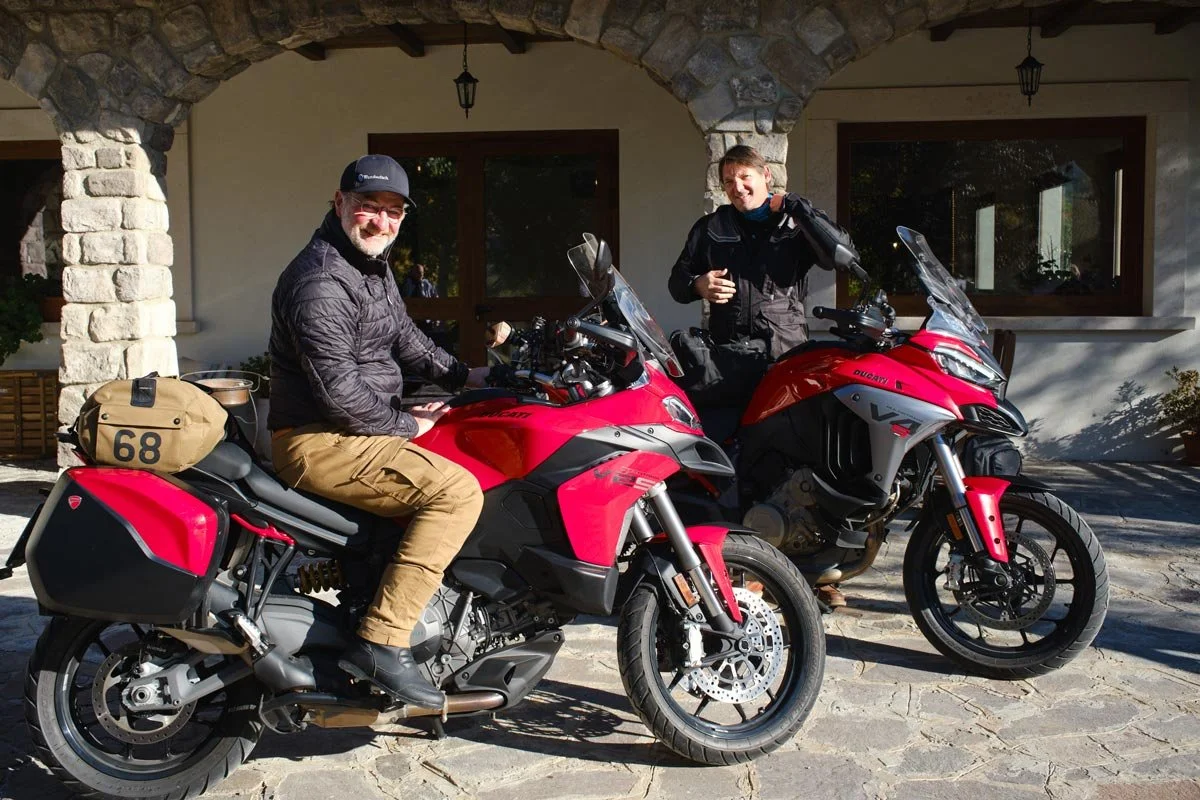
Ducati Multistrada V2S and V4 are some of most solid choices
The packing list
Documents
Driving licence
International Driving Permit (if required — see above)
Credit card (pre-authorised for foreign transactions)
Cash in small denominations (€5, €10, €20)
Travel insurance documents
Riding
Riding gear
Motorcycle waterproofs
Extra mid-layer / thermal base layer
Gloves appropriate to the route (light / winter)
Sunglasses
Navigation & Tech
Smartphone with data plan
GPX navigation app loaded with tour files (landscape mode tested)
USB charging cable for bike
Portable battery pack
EU power adapter
Daily Essentials
Swimwear
Small towel
Suncream
Small water flask / bottle
Flip flops or sliders
Health
Personal medication
Basic first aid / pain relief
Antihistamine
Riding Italy well is partly about the road, partly about the bike, and partly about not having to shop at a market stall in Sardinia. Most of this list is common sense — but common sense has a way of staying at home in the excitement of packing.
If you're joining an All Routes Italy tour, we'll send your full route plan and GPX files ahead of time. Any questions before departure, we're here.
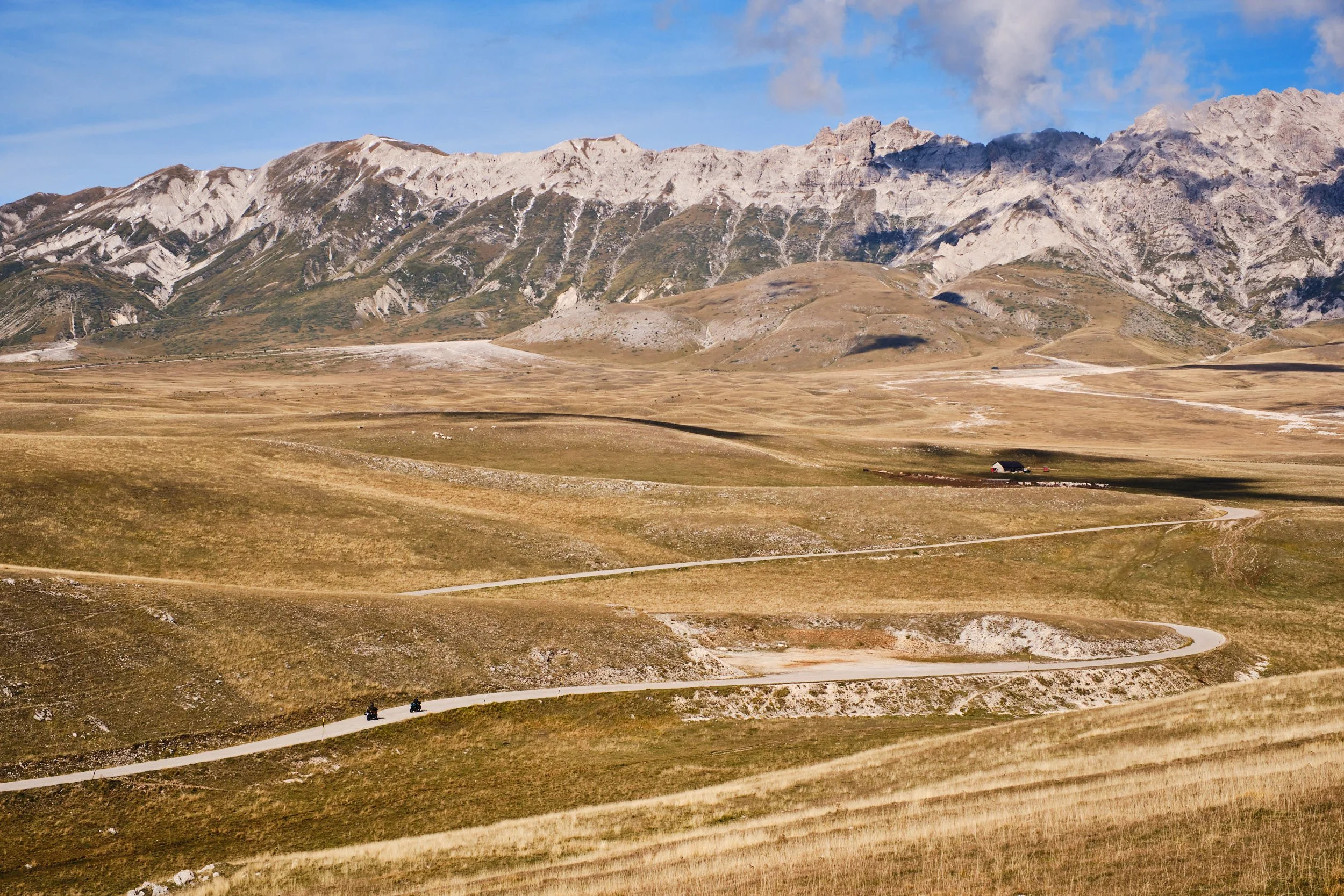
On the Gran Sasso plateau